
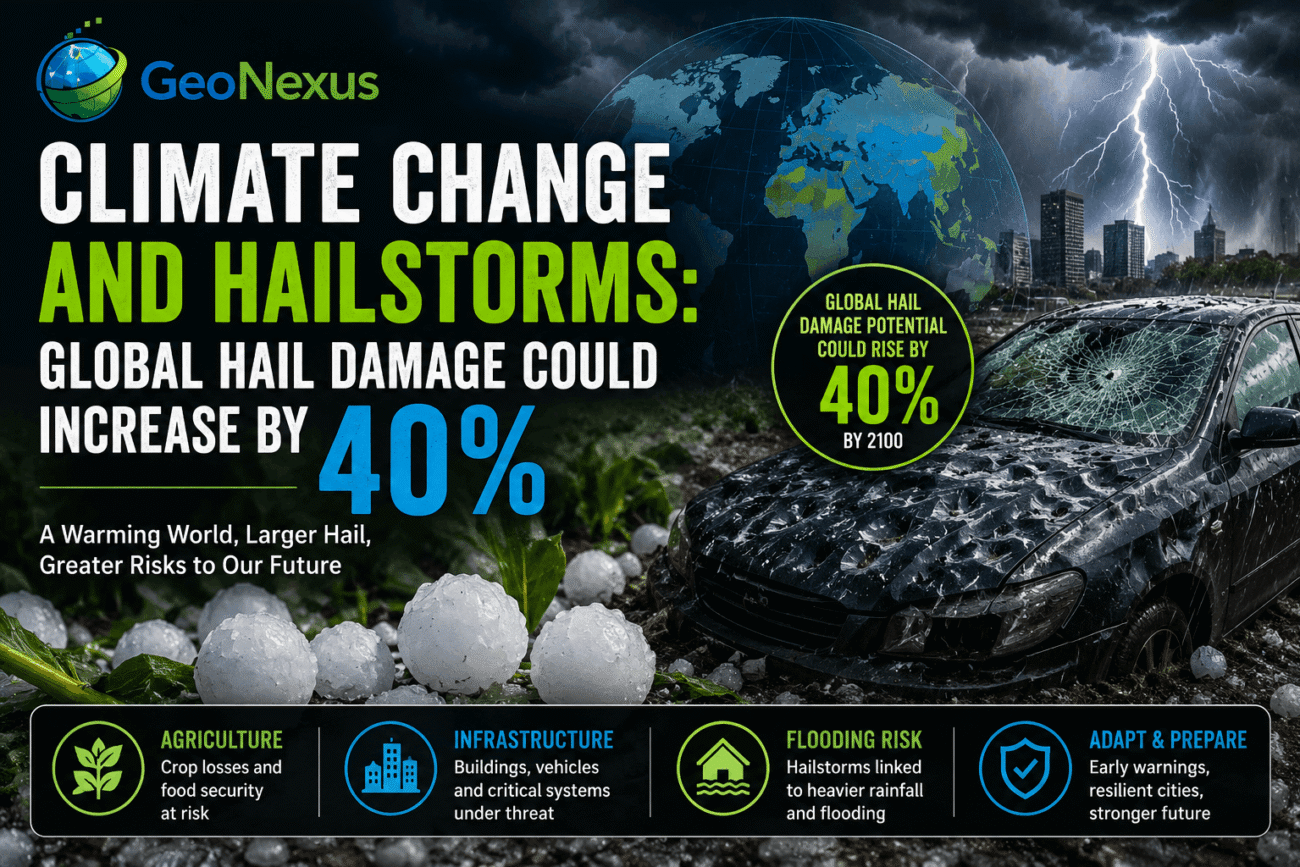
Introduction: Climate Change and the Rising Threat of Hailstorms
Climate Change and Hailstorms are becoming increasingly interconnected as rising global temperatures reshape the dynamics of severe weather events. While considerable attention has focused on heatwaves, floods, and droughts, hailstorms remain one of the most destructive and costly weather hazards worldwide, causing billions of dollars in annual damage to agriculture, infrastructure, and property (Allen et al., 2020; Raupach et al., 2021). While considerable attention has been given to heatwaves, floods, droughts, and tropical cyclones, hailstorms remain one of the most damaging yet comparatively understudied weather hazards. Hail causes substantial losses to agriculture, transportation networks, buildings, solar energy infrastructure, and insured property every year, accounting for billions of dollars in economic damage worldwide (Allen et al., 2020; Raupach et al., 2021). In many regions, hail-related losses have increased significantly during recent decades, raising concerns about how future climate change may influence hailstorm occurrence and severity (Changnon, 2009; Brimelow et al., 2017).
The growing societal relevance of hail hazards has become particularly evident through a series of destructive hailstorms that have impacted major urban centers in recent years. Cities such as Denver, Paris, and Beijing have experienced unprecedented hail events, causing widespread infrastructure damage and economic disruption (Zhang et al., 2026). These events highlight the increasing vulnerability of densely populated regions to severe convective weather and emphasize the need to understand how hailstorm risks may evolve under continued global warming.
Unlike many other climate hazards, the response of hailstorms to climate change is highly complex because hail formation depends on a delicate interaction between atmospheric instability, moisture availability, vertical wind shear, cloud microphysics, and the altitude of the melting layer (Dessens et al., 2015; Lin & Kumjian, 2022; Dennis & Kumjian, 2017). Warmer atmospheric conditions can increase moisture content according to the Clausius–Clapeyron relationship, enhancing convective available potential energy (CAPE) and strengthening thunderstorm updrafts (Diffenbaugh et al., 2013; Taszarek et al., 2021). Stronger updrafts allow hail embryos to remain suspended within storm clouds for longer periods, promoting the growth of larger hailstones. At the same time, rising temperatures increase melting-layer heights, which can reduce the number of smaller hailstones reaching the ground while allowing larger hailstones to dominate severe hail events (Dessens et al., 2015; Prein & Heymsfield, 2020).
Recent studies suggest that climate change may not necessarily increase the total number of hailstorms everywhere, but it is likely to alter hailstone size distributions toward more damaging events. Research across North America, Europe, Australia, and other hail-prone regions has consistently identified a future tendency toward fewer small hailstones and more frequent large hailstones capable of causing severe damage (Brimelow et al., 2017; Trapp et al., 2019; Gensini et al., 2024; Kahraman et al., 2025; Thurnherr et al., 2025). This emerging “hail-size dichotomy” has become one of the most important findings in recent hail-climate research, suggesting that warming climates may increase hail-related losses even if overall hail frequency remains unchanged.
Despite these advances, most previous investigations have been limited to regional case studies, leaving considerable uncertainty regarding global-scale changes in hail hazard potential. To address this knowledge gap, Zhang et al. (2026) conducted one of the first comprehensive global assessments of future hailstorm damage potential using a semi-three-dimensional hail trajectory model driven by multiple climate scenarios and climate model ensembles. Their findings indicate that global hailstorm-induced damage potential could increase by approximately 36.5–42.1% by the late twenty-first century, depending on future greenhouse gas emission pathways. The increase is primarily associated with a substantial rise in hailstones exceeding 30 mm in diameter, while smaller hailstones become less common.
Importantly, the study reveals that future hail risks will not be distributed uniformly across the globe. Mid- and high-latitude regions—including large portions of North America, Europe, China, Australia, and South America—are projected to experience increased hail damage potential because of stronger atmospheric instability and enhanced hail growth conditions. Conversely, some tropical and monsoonal regions may witness reduced hail damage potential owing to differences in warming rates, moisture responses, and hail growth-layer depth (Zhang et al., 2026). These contrasting regional responses underscore the importance of understanding the physical mechanisms linking climate change and hailstorm behavior.
As global temperatures continue to rise, understanding the future evolution of hailstorms is becoming increasingly important for climate adaptation, disaster risk reduction, agricultural resilience, and urban planning. This article explores the science of hail formation, examines the latest evidence on climate-driven changes in hailstorm behavior, identifies emerging global hotspots of hail risk, and discusses the implications of increasing hail damage potential in a warming world.
Why Hailstorms Cause Billions in Damage Every Year
Among all severe weather hazards, hailstorms are unique because of their ability to cause extensive damage within a short period and over relatively small geographic areas. Unlike floods or droughts, which often develop gradually, hailstorms can strike with little warning, unleashing large ice particles capable of damaging crops, vehicles, buildings, power infrastructure, and solar energy installations within minutes. As a result, hail has become one of the costliest weather-related hazards worldwide, generating billions of dollars in annual economic losses and insurance claims (Allen et al., 2020; Raupach et al., 2021).
The destructive power of hail is primarily determined by hailstone size and impact energy. As hailstones grow larger, their mass and terminal velocity increase substantially, resulting in much greater kinetic energy upon impact. While small hailstones may cause minor cosmetic damage, larger hailstones exceeding 25–30 mm in diameter can shatter windows, dent vehicles, damage roofs, destroy crops, and disrupt critical infrastructure. Extremely large hailstones, sometimes exceeding 50 mm in diameter, can even pose direct risks to human safety and livestock (Dennis & Kumjian, 2017; Lin & Kumjian, 2022). Because impact energy increases rapidly with hailstone size, a relatively small increase in hail diameter can produce disproportionately larger economic losses.
Agriculture remains one of the sectors most vulnerable to hail damage. Crops can be severely affected within a matter of minutes, particularly during sensitive growth stages such as flowering and grain filling. Hailstorms can strip leaves, break stems, damage fruits, and reduce yields, resulting in significant financial losses for farmers. In many agricultural regions, hail is considered one of the most important weather-related threats to food production, frequently causing localized crop failures and increased insurance payouts (Brimelow et al., 2017; Raupach et al., 2021). As climate change alters hailstone size distributions, concerns are growing that future agricultural losses could become even more severe.
Urban areas are also increasingly exposed to hail-related risks. Rapid urbanization has expanded the concentration of high-value assets, including residential buildings, commercial infrastructure, transportation networks, and renewable energy facilities. Modern structures often incorporate materials such as glass panels, lightweight roofing systems, and photovoltaic solar arrays that are particularly susceptible to hail impacts. Recent severe hailstorms have caused hundreds of millions of dollars in losses in major cities across North America, Europe, and Asia, demonstrating the vulnerability of densely populated urban environments to convective weather hazards (Allen et al., 2020; Gensini et al., 2024).
The insurance industry provides further evidence of the growing economic significance of hailstorms. In many countries, hail-related claims now account for a substantial proportion of weather-related insurance losses. Studies indicate that increasing property exposure, urban expansion, and rising asset values have amplified the financial consequences of severe hail events, even in regions where hailstorm frequency has remained relatively stable (Raupach et al., 2021). Consequently, insurers and risk analysts increasingly recognize hail as a major climate-sensitive hazard requiring improved forecasting, risk assessment, and adaptation planning.
Beyond direct physical damage, hailstorms can trigger broader socioeconomic disruptions. Transportation systems may be temporarily halted, power networks damaged, and emergency response resources stretched during severe events. Hail can also interact with other weather hazards such as intense rainfall, strong winds, and flash flooding, creating compound disaster scenarios that further increase losses and complicate recovery efforts (Prein & Heymsfield, 2020; Zhang et al., 2026). These cascading impacts highlight why hailstorms represent not merely a meteorological phenomenon but a significant challenge for disaster risk management and climate resilience.
As climate change continues to influence atmospheric conditions favorable for severe thunderstorms, understanding the economic and societal impacts of hail becomes increasingly important. The combination of growing exposure, expanding urban infrastructure, and projections of larger hailstones suggests that future hail-related losses could rise substantially, making hailstorms an emerging concern in climate adaptation and risk management strategies worldwide (Zhang et al., 2026).
How Hail Forms Inside Severe Thunderstorms
To understand why climate change may increase hail damage in the future, it is first necessary to understand how hail forms. Hail is not simply frozen rain. Instead, it is the product of powerful thunderstorms capable of lifting water droplets high into the atmosphere, where temperatures fall well below freezing. The formation and growth of hailstones depend on a complex interaction between atmospheric moisture, temperature, instability, and storm dynamics, making hail one of the most fascinating and challenging weather phenomena to predict (Dennis & Kumjian, 2017; Lin & Kumjian, 2022).
Hail formation begins inside deep convective thunderstorms, often referred to as cumulonimbus clouds. These storms develop when warm, moist air near the Earth’s surface rises rapidly into colder layers of the atmosphere. As the air ascends, water vapor condenses into cloud droplets, releasing latent heat that further strengthens the upward motion. Under favorable conditions, these updrafts can exceed speeds of 100 km h⁻¹, creating an environment capable of suspending water droplets and ice particles for extended periods (Taszarek et al., 2021).
Within the upper regions of a thunderstorm lies the hail growth zone, where temperatures typically range between −10°C and −30°C. In this region, supercooled water droplets—liquid water that remains unfrozen despite sub-zero temperatures—play a critical role in hail development. Small ice particles, often called hail embryos, collide with these supercooled droplets, which freeze instantly upon contact. Layer by layer, the ice particle accumulates additional frozen water and gradually grows into a hailstone (Dennis & Kumjian, 2017).
The journey of a hailstone inside a thunderstorm is far from straightforward. Rather than falling directly to the ground, hailstones are repeatedly carried upward by powerful storm updrafts. As they move through different parts of the cloud, they encounter varying concentrations of liquid water and ice particles. Each cycle through the storm adds new layers of ice, much like the growth rings of a tree. Some hailstones may complete multiple growth cycles before eventually becoming too heavy for the updraft to support. Once gravitational forces exceed the strength of the updraft, the hailstone begins its descent toward the surface (Kumjian et al., 2021).
The final size of a hailstone is largely determined by the balance between growth and melting. Stronger updrafts allow hailstones to remain suspended longer, increasing the amount of ice they can accumulate. Moist environments provide abundant supercooled water, further enhancing hail growth. Conversely, warmer atmospheric layers below the cloud can cause hailstones to melt before reaching the ground, particularly smaller stones. This delicate balance explains why some storms produce only small hail while others generate hailstones large enough to cause widespread destruction (Prein & Heymsfield, 2020).
Meteorologists often classify hail based on its diameter because size is closely linked to damage potential. Hailstones larger than 20 mm are generally considered severe, while stones exceeding 50 mm can cause extensive damage to crops, vehicles, roofs, and windows. In rare cases, giant hailstones larger than 100 mm have been observed, carrying enormous kinetic energy capable of producing catastrophic local impacts (Allen et al., 2020).
Climate change influences several of the atmospheric ingredients required for hail formation. A warmer atmosphere can hold more moisture, increasing the amount of water available within thunderstorms. At the same time, rising temperatures often enhance atmospheric instability, leading to stronger updrafts that favor hail growth. However, warming also raises the altitude of the freezing and melting layers, which can increase hail melting before stones reach the ground. The interaction between these competing processes determines whether a region experiences more or less hail in the future (Prein & Heymsfield, 2020; Zhang et al., 2026).
This balance between enhanced hail growth and increased melting lies at the heart of current research on climate change and hailstorms. Recent global simulations suggest that although smaller hailstones may become less common, larger hailstones are likely to increase in frequency across many regions. Because larger hailstones possess far greater impact energy, even modest increases in their occurrence can substantially raise future hail damage potential (Zhang et al., 2026). Understanding these physical processes provides the foundation for interpreting the study’s findings and assessing how hail risks may evolve in a warming world.
What This New Global Study Reveals
Although scientists have long recognized hail as one of the most damaging weather hazards, understanding how climate change will affect future hail risks has remained a major challenge. Most previous studies have focused on individual countries or specific regions, producing results that often varied depending on local climate conditions. Consequently, a comprehensive global assessment of future hail damage potential has been lacking. To address this critical knowledge gap, Zhang et al. (2026) conducted one of the most extensive investigations to date, examining how hailstorm characteristics and associated damage may evolve under different climate change scenarios throughout the twenty-first century.
The study combines advanced climate modeling with a semi-three-dimensional hail trajectory model capable of simulating hailstone growth, movement, and melting within thunderstorms. Unlike traditional approaches that rely solely on atmospheric indicators such as convective available potential energy (CAPE) or wind shear, this method directly models the physical processes governing hail formation and growth. The researchers utilized outputs from three state-of-the-art climate models—EC-Earth3, MPI-ESM1-2-LR, and NorESM2-LM—and evaluated future conditions under multiple Shared Socioeconomic Pathway (SSP) scenarios, including SSP2-4.5, SSP3-7.0, and SSP5-8.5 (Zhang et al., 2026).
A key innovation of the study is the use of a pseudo-global-warming (PGW) framework. This approach applies future climate changes projected by global climate models to historical atmospheric environments, enabling researchers to isolate the effects of climate warming on hail-producing storms. By combining thousands of simulated storm environments with detailed hail-growth calculations, the study provides one of the most robust estimates currently available of how future climate change may influence hailstorm damage potential at the global scale (Zhang et al., 2026).
The results reveal a striking and consistent pattern across all future climate scenarios. While the total number of hailstones may not necessarily increase everywhere, the distribution of hail sizes shifts toward larger and more destructive hailstones. In particular, hailstones exceeding 30 mm in diameter become significantly more common across many regions, whereas smaller hailstones become less frequent. This finding supports a growing body of evidence suggesting that climate change favors the development of severe hail events rather than simply increasing overall hail occurrence (Prein & Heymsfield, 2020; Gensini et al., 2024).
Perhaps the most important finding of the study is the projected increase in global hail damage potential. Using accumulated kinetic energy as a measure of damage, the researchers estimate that global hailstorm-induced damage potential could rise by approximately 36.5% under SSP2-4.5, 37.8% under SSP3-7.0, and as much as 42.1% under SSP5-8.5 by the late twenty-first century. These increases are primarily driven by the growing prevalence of larger hailstones, which carry substantially greater impact energy and therefore cause disproportionately higher levels of damage than smaller hailstones (Zhang et al., 2026).
Another important insight is that future hail risk will not be distributed uniformly around the world. Regions located in the mid- and high-latitudes generally experience the largest increases in hail damage potential because warmer atmospheric conditions enhance instability and support stronger thunderstorm updrafts. In contrast, some tropical and monsoon-dominated regions may see little change or even reductions in hail damage potential owing to increased melting and changes in atmospheric structure. These regional differences highlight the importance of considering local climate dynamics when evaluating future hail hazards (Zhang et al., 2026).
The study also reveals that changes in hail damage are closely linked to modifications in the atmospheric environment. Increased moisture availability, stronger convective instability, and enhanced updraft strength create favorable conditions for hail growth. At the same time, rising freezing levels alter the balance between hail growth and melting. Together, these processes lead to a future climate characterized by fewer small hailstones but a greater likelihood of large, high-impact hail events capable of causing substantial economic losses (Dessens et al., 2015; Prein & Heymsfield, 2020; Zhang et al., 2026).
Taken together, the findings provide compelling evidence that climate change is likely to increase the destructive potential of hailstorms across many parts of the world. Rather than simply changing how often hail occurs, future warming appears poised to alter the very nature of hail events by favoring larger hailstones with greater damage-causing capacity. These projections underscore the need for improved risk assessment, resilient infrastructure design, and climate adaptation strategies in regions vulnerable to severe hailstorms.
Bigger Hailstones, Greater Damage
One of the most significant findings of the study by Zhang et al. (2026) is that climate change is expected to alter the size distribution of hailstones, shifting the balance toward larger and more destructive hail events. While smaller hailstones may become less common in many regions, the frequency of hailstones capable of causing severe damage is projected to increase substantially. This change is particularly important because hail-related losses are driven not only by how often hail occurs, but also by the size and impact energy of individual hailstones.
The study found a clear global trend toward larger hailstones under future climate scenarios. By the late twenty-first century, the frequency of hailstones larger than 30 mm in diameter is projected to increase by approximately 37.9% under SSP2-4.5, 47.3% under SSP3-7.0, and 51.8% under SSP5-8.5. In contrast, hailstones smaller than 30 mm are expected to decline by 4.2%, 7.8%, and 12.3%, respectively. This consistent pattern across multiple climate models suggests a robust shift toward more severe hail events as the climate continues to warm (Zhang et al., 2026).
At first glance, a reduction in the number of smaller hailstones may appear beneficial. However, the economic consequences of hailstorms are determined primarily by the largest hailstones produced during an event. A hailstone measuring 50 mm in diameter carries far more kinetic energy than one measuring 20 mm because impact energy increases disproportionately with size. Consequently, even modest increases in the frequency of large hailstones can translate into substantial increases in property damage, agricultural losses, and insurance claims (Allen et al., 2020; Raupach et al., 2021).
To quantify future hail impacts, Zhang et al. (2026) used accumulated kinetic energy (AKE), a widely recognized indicator of hail damage potential. Unlike simple hail counts, AKE incorporates both hailstone size and impact energy, providing a more realistic representation of the destructive capacity of hailstorms. Their simulations revealed that global hailstorm-induced damage potential could increase by 36.5–42.1% by the end of the century, depending on future greenhouse gas emission pathways. Notably, most of this increase originates from hailstones larger than 30 mm, highlighting the dominant role of severe hail in future damage projections.
The physical explanation behind this trend lies in how thunderstorms respond to a warming atmosphere. Higher temperatures allow the atmosphere to hold more moisture, increasing the energy available for convective storms. This additional energy strengthens thunderstorm updrafts, enabling hail embryos to remain suspended within clouds for longer periods and accumulate more ice. As a result, hailstones can grow larger before gravity eventually overcomes the updraft and they fall toward the ground. The study demonstrates that stronger updrafts and richer cloud-water environments contribute significantly to increased hail growth across many future climate scenarios (Zhang et al., 2026).
Interestingly, climate warming also increases the height of the melting layer, causing more small hailstones to melt before reaching the surface. This explains why future projections show fewer small hailstones but more large hailstones. Smaller stones are more vulnerable to melting during their descent, whereas larger hailstones can survive the warmer atmospheric layers and still reach the ground with considerable size and destructive power. This process effectively amplifies the contrast between minor and severe hail events, producing what researchers describe as a future “hail-size dichotomy” (Gensini et al., 2024; Zhang et al., 2026).
The implications of this shift are substantial. Agriculture is particularly vulnerable because larger hailstones can devastate crops within minutes, causing extensive yield losses and threatening food security. Urban infrastructure, including vehicles, roofs, windows, and solar energy installations, also faces heightened risks. In many regions, insurance losses from severe hail already exceed those from several other weather hazards, and the projected increase in large hailstones could place additional pressure on insurers, governments, and disaster management agencies (Changnon, 2009; Allen et al., 2020).
Ultimately, the study suggests that future hailstorms may not necessarily occur more frequently everywhere, but they are likely to become more damaging where they do occur. The increasing prevalence of large hailstones represents one of the clearest examples of how climate change can amplify weather-related risks through changes in event intensity rather than simply event frequency. As a result, understanding and preparing for larger hailstones will be a critical component of climate adaptation and disaster resilience strategies in the decades ahead.
Global Hotspots of Future Hail Risk
Although climate change is projected to increase global hail damage potential overall, the impacts will not be evenly distributed across the world. One of the most important findings of Zhang et al. (2026) is the strong regional variability in future hail risk. While many mid- and high-latitude regions are expected to experience substantially greater hail damage potential, some tropical and monsoon-dominated areas may see little change or even decreases in hail severity. These contrasting responses highlight the complex interaction between atmospheric warming, moisture availability, instability, and hail growth processes.
North America: Expanding Risk Across Hail-Prone Regions
North America remains one of the world’s most hail-prone regions and is projected to experience notable increases in future hail damage potential. The study identifies widespread positive changes across much of the United States and southern Canada, with particularly strong increases in the Northern Great Plains, Midwest, and Northeastern United States. These regions are expected to benefit from stronger atmospheric instability and enhanced hail growth conditions, favoring the formation of larger hailstones. Although some parts of the southeastern United States and southern Great Plains show comparatively weaker signals, the overall trend points toward increased hail-related losses across large portions of the continent.
Europe: A Growing Threat in Mid- and Northern Latitudes
Europe emerges as another major hotspot of future hail risk. The simulations indicate significant increases in hail damage potential across northern and central Europe, where warmer atmospheric conditions are expected to enhance thunderstorm intensity and hail growth. Countries across western, central, and northern Europe may experience a greater frequency of large hailstones, increasing risks to agriculture, infrastructure, and urban areas. However, the response is not uniform. Parts of southern Europe, including sections of Spain and the Balkan Peninsula, exhibit weaker increases or localized decreases in hail damage potential, reflecting regional differences in atmospheric moisture and instability responses to climate change.
China: A North–South Contrast
China demonstrates one of the clearest examples of regional variability. The study identifies a distinct transition zone around central China, separating areas of increasing and decreasing hail damage potential. Northeastern China is projected to experience substantial increases in severe hail risk, while some southern regions show weaker signals or localized decreases. This pattern reflects differences in warming rates, moisture availability, and atmospheric instability across the country. Given China’s large population and extensive agricultural production, these projected changes could have significant socioeconomic implications in the coming decades.
South America: Significant Increases in the Mid-Latitudes
Among all analyzed regions, parts of subtropical South America exhibit some of the strongest projected increases in hail damage potential. Northern Argentina and southern Brazil stand out as particularly vulnerable areas where future atmospheric conditions favor larger hailstone development. The study reports substantial increases in hailstorm destructive potential across these regions, driven by enhanced instability and favorable hail growth environments. Given the agricultural importance of these areas, increasing hail risks could pose serious challenges to crop production and rural economies.
Africa: Contrasting Responses Across the Continent
Africa presents a more complex picture. The southern margin of the Sahel region shows some of the strongest positive changes in hail damage potential globally. Enhanced atmospheric instability associated with increasing temperature and moisture creates favorable conditions for severe hail development. In contrast, equatorial regions of Africa display mixed responses, with some locations experiencing decreases in hail damage potential due to stronger moistening trends and reduced hail growth efficiency. These findings highlight the importance of regional climate dynamics in determining future hail hazards across the continent.
Australia: Rising Risk in the East
Australia also exhibits strong regional contrasts. Eastern Australia, where a large proportion of the country’s population and infrastructure is concentrated, is projected to experience increasing hail damage potential. Stronger storm environments and enhanced hail growth processes contribute to this trend. Conversely, northern Australia generally shows decreasing signals, reflecting differences in atmospheric responses to warming between tropical and temperate regions. These projections are particularly relevant given the history of costly hail events affecting major Australian cities.
Why Do These Hotspots Exist?
The geographic pattern of future hail risk is closely linked to how different regions respond to climate change. Mid- and high-latitude regions generally experience stronger warming combined with moderate moisture increases, creating highly unstable environments favorable for powerful thunderstorm updrafts and hail growth. In contrast, many tropical regions experience stronger moistening but weaker warming, which can increase cloud water loading and hail melting while limiting hailstone growth. As a result, future hail hazards are expected to intensify primarily in regions where warming sufficiently enhances instability without allowing melting processes to dominate.
Overall, the study reveals that future hail risk is not a uniform global phenomenon but rather a collection of regional hotspots shaped by local climate responses. Identifying these vulnerable regions is essential for improving disaster preparedness, strengthening infrastructure resilience, protecting agricultural systems, and developing targeted climate adaptation strategies. As the climate continues to warm, understanding where hail risks are likely to increase will become increasingly important for both policymakers and communities worldwide.
Why Climate Change Favors Large Hail
One of the most intriguing findings of recent hail research is that climate change does not simply increase or decrease hail occurrence uniformly. Instead, it appears to favor the formation of larger hailstones while reducing the frequency of smaller ones. This shift toward more destructive hail is driven by fundamental changes in the atmospheric environment, particularly increases in temperature, moisture availability, and storm instability. The study by Zhang et al. (2026) demonstrates that these factors work together to create conditions that support hail growth, ultimately increasing the damage potential of future hailstorms.
At the heart of this process is a basic principle of atmospheric physics: a warmer atmosphere can hold more water vapor. According to the Clausius–Clapeyron relationship, atmospheric moisture increases by approximately 7% for every 1°C rise in temperature. As global temperatures continue to rise, more moisture becomes available within developing thunderstorms. This additional moisture provides a larger reservoir of cloud water that can be converted into ice during hail formation, creating favorable conditions for larger hailstones to develop (Diffenbaugh et al., 2013; Taszarek et al., 2021). The study found consistent increases in both low-level temperature and specific humidity across all future climate scenarios, indicating that future thunderstorms will generally contain more energy and moisture than those of today.
Another critical factor is atmospheric instability, commonly measured using Most Unstable Convective Available Potential Energy (MUCAPE). As low-level temperatures and moisture increase, thunderstorms gain access to greater amounts of buoyant energy. This energy fuels stronger updrafts—rapid upward currents of air that are essential for hail formation. Strong updrafts can keep hail embryos suspended within the storm for longer periods, allowing them to collect more supercooled water droplets and grow larger before eventually falling to the ground. Zhang et al. (2026) found that future climates generally exhibit higher MUCAPE values and stronger updraft potential, particularly across mid- and high-latitude regions where hail damage potential increases most strongly.
The study also highlights the importance of the hail growth layer—the portion of a thunderstorm where hailstones accumulate ice. Under future climate conditions, stronger updrafts and increased cloud water content expand the opportunities for hail growth. Hail embryos spend more time within favorable growth zones, resulting in larger hailstones reaching the ground. Simulations show that future storms produce substantially more hailstones exceeding 30 mm in diameter, a threshold often associated with severe hail damage. This explains why projected increases in hail-related losses are driven primarily by larger hailstones rather than by changes in total hail occurrence.
However, climate change also introduces an opposing process: increased melting. As temperatures rise, the altitude of the melting layer—the atmospheric level where ice begins to melt—moves upward. Smaller hailstones are particularly vulnerable to melting during their descent through warmer air below the cloud. Consequently, many hailstones that might previously have reached the ground now melt partially or completely before impact. This process reduces the number of small hailstones observed at the surface while allowing larger hailstones, which possess greater mass and resistance to melting, to survive their descent. The result is a pronounced shift in hailstone size distribution toward fewer small stones and more large, damaging stones.
This balance between enhanced hail growth and increased melting creates what researchers describe as a “hail-size dichotomy.” Future climates are projected to produce fewer hailstones smaller than 30 mm but significantly more hailstones larger than 30 mm. Globally, the frequency of large hailstones is projected to increase by nearly 38–52%, while smaller hailstones decline by approximately 4–12%, depending on the emissions scenario considered (Zhang et al., 2026). Because the destructive power of hail increases disproportionately with size, even relatively small increases in the occurrence of large hailstones can produce substantial increases in economic losses.
The response is not identical everywhere. In many mid- and high-latitude regions, warming is strong enough to substantially increase atmospheric instability, outweighing the negative effects of melting and leading to larger hailstones and greater damage potential. In contrast, some tropical and monsoonal regions experience weaker warming but stronger moistening. In these environments, increased cloud-water loading and higher melting levels can limit hail growth, reducing the likelihood of severe hail reaching the ground. These regional differences explain why future hail risks increase in some areas while decreasing in others.
Ultimately, climate change favors large hail because it strengthens the very processes that promote hail growth—greater moisture, stronger instability, and more powerful updrafts—while simultaneously eliminating many smaller hailstones through enhanced melting. The net result is a future atmosphere capable of producing fewer minor hail events but more severe hailstorms, significantly increasing the potential for damage to agriculture, infrastructure, and communities worldwide.
Agriculture Under Increasing Hail Threat
Agriculture is among the sectors most vulnerable to hailstorms, and the projected increase in large hailstones under climate change poses a growing challenge to global food production systems. Unlike many weather hazards that develop gradually, hail can inflict severe crop damage within minutes, destroying months of agricultural investment in a single storm. As climate change shifts hailstone distributions toward larger and more destructive sizes, concerns are mounting over future impacts on crop yields, farm incomes, and food security (Raupach et al., 2021; Zhang et al., 2026).
The severity of hail damage depends largely on the size, density, and impact energy of hailstones. Small hail may cause minor leaf damage, but larger hailstones can shred foliage, break stems, bruise fruits, destroy flowers, and severely damage developing grains. Crops are particularly vulnerable during sensitive growth stages such as flowering, pollination, and grain filling, when physical injury can dramatically reduce productivity. Because the kinetic energy of hailstones increases rapidly with size, the projected rise in hailstones larger than 30 mm represents a substantial escalation in agricultural risk (Allen et al., 2020; Zhang et al., 2026).
The findings of Zhang et al. (2026) suggest that many major agricultural regions located in the mid-latitudes may face increasing hail damage potential during the twenty-first century. Regions such as the Great Plains and Midwest of North America, large parts of Europe, northeastern China, southern Brazil, and northern Argentina are projected to experience more favorable conditions for the development of large hailstones. These areas are not only recognized as important hail-prone regions but also serve as major centers of global agricultural production. Consequently, increases in severe hail events could have significant implications for food supply chains and rural economies.
Crop losses caused by hail extend far beyond immediate yield reductions. Physical damage to plants can increase susceptibility to pests and diseases, reduce crop quality, delay harvest operations, and require costly replanting efforts. High-value crops such as fruits, vegetables, vineyards, and horticultural products are particularly sensitive because even minor cosmetic damage can reduce market value substantially. In regions where hailstorms occur frequently, farmers often face recurring financial uncertainty, making hail one of the most economically significant weather hazards affecting agriculture (Allen et al., 2020).
Climate change may further compound these challenges by increasing the intensity of severe convective storms. The study demonstrates that warmer and more moisture-rich atmospheres support stronger thunderstorm updrafts, allowing hailstones to remain suspended longer and grow larger before reaching the surface. While increased melting may reduce the number of smaller hailstones, larger hailstones are more likely to survive their descent and strike crops with greater force. This shift toward fewer but more destructive hail events could amplify agricultural losses even if overall hail frequency changes little (Zhang et al., 2026).
Another emerging concern is the interaction between hailstorms and other climate-related hazards. Many agricultural regions are already experiencing increasing heat stress, drought, and extreme rainfall associated with climate change. Hail damage occurring alongside these stressors can further weaken crop resilience and reduce recovery potential. For example, crops already affected by drought may be less capable of recovering from physical hail damage, while hail-induced plant injuries can increase vulnerability to disease outbreaks following heavy rainfall events. Such compound impacts may pose additional challenges for agricultural adaptation and risk management in the future.
The economic implications are equally significant. Hail-related insurance claims represent a major component of agricultural losses in many countries, and increasing hail damage potential could place greater pressure on both public and private insurance systems. Rising losses may lead to higher insurance premiums, increased compensation costs, and greater financial burdens on farmers. In regions where crop insurance coverage is limited, severe hailstorms can threaten livelihoods and long-term agricultural sustainability (Changnon, 2009; Raupach et al., 2021).
Adapting agriculture to increasing hail risks will require a combination of technological, agronomic, and policy-based solutions. Improved weather forecasting and early-warning systems can help farmers take protective actions before severe storms occur. Protective measures such as hail nets, reinforced greenhouse structures, and climate-resilient farming practices may reduce vulnerability in high-risk areas. Advances in geospatial monitoring, remote sensing, and climate-risk mapping can also support more targeted adaptation strategies by identifying emerging hail hotspots and vulnerable agricultural zones.
As climate change continues to reshape severe weather patterns, hailstorms are likely to become an increasingly important agricultural hazard in many parts of the world. The projected increase in large hailstones highlights the need for proactive adaptation measures to safeguard crop production, strengthen food security, and enhance the resilience of farming systems in a warming climate. Understanding these evolving risks will be essential for ensuring sustainable agricultural development in the decades ahead.
Read more: How to Calculate Normalized Difference Fraction Index (NDFI) in Google Earth Engine
Cities, Infrastructure, and Economic Losses
While hailstorms have long been recognized as a major agricultural hazard, their impacts on cities and infrastructure have grown rapidly in recent decades. Accelerating urbanization, expanding transportation networks, and the increasing concentration of high-value assets have significantly increased society’s exposure to severe hail events. As a result, hail is now considered one of the costliest convective weather hazards worldwide, causing billions of dollars in annual economic losses through damage to buildings, vehicles, energy infrastructure, and public facilities (Allen et al., 2020; Raupach et al., 2021).
One of the primary reasons hail generates such substantial losses is its ability to inflict widespread damage within a short period. Large hailstones can shatter windows, puncture roofs, damage exterior walls, and destroy skylights in a matter of minutes. Residential neighborhoods, commercial districts, industrial facilities, and public infrastructure can all be affected simultaneously during a severe hailstorm. Unlike hazards such as floods or droughts, which often develop over longer periods, hailstorms strike suddenly and can overwhelm local response systems with little warning.
The risk to urban areas is expected to increase further under climate change. Zhang et al. (2026) project a substantial rise in hailstones larger than 30 mm in diameter across many regions, accompanied by a 36.5–42.1% increase in global hailstorm-induced damage potential by the late twenty-first century. Because hail damage increases disproportionately with hailstone size, even modest increases in the frequency of large hailstones can lead to significant increases in repair costs and insurance claims.
Vehicles are among the most frequently damaged assets during hailstorms. Large hailstones can dent body panels, crack windshields, damage mirrors, and impair vehicle functionality. In densely populated cities, thousands of vehicles may be affected during a single event, resulting in enormous insurance payouts. In many countries, automobile-related claims account for a substantial share of total hailstorm losses, particularly when storms strike major metropolitan areas with high vehicle densities (Changnon, 2009).
Buildings and critical infrastructure are similarly vulnerable. Roofing materials, especially lightweight roofing systems, can suffer severe impact damage from large hailstones. Glass façades, solar panels, air-conditioning systems, and communication infrastructure are increasingly exposed as modern cities expand vertically and adopt more technologically integrated building designs. The growing use of renewable energy infrastructure introduces an additional concern, as photovoltaic solar installations are particularly susceptible to hail impacts. Damage to solar farms and rooftop solar systems can result not only in repair costs but also in disruptions to energy generation and grid reliability.
Recent hail events have demonstrated the magnitude of these risks. According to Zhang et al. (2026), several multibillion-dollar hailstorms have occurred during the past few years, including destructive events affecting Denver in the United States, Paris in France, and Beijing in China. These storms highlight how severe hail can affect major urban centers regardless of geographic location, creating substantial economic losses and disrupting daily life.
The study further identifies numerous urbanized regions projected to experience increasing hail damage potential during the coming decades. Large portions of North America, Europe, northeastern China, eastern Australia, and parts of South America show significant increases in future hail risk. Many of these areas contain densely populated cities, major transportation corridors, industrial zones, and critical economic infrastructure. Consequently, future hail-related losses may increase not only because of larger hailstones but also because more people and assets are exposed to severe storms.
Insurance data provide additional evidence of the growing economic significance of hailstorms. In several countries, hail-related claims have increased steadily over recent decades, driven by a combination of expanding urban exposure and increasing asset values. Even if hailstorm frequency remains relatively stable, larger hailstones and greater concentrations of vulnerable infrastructure can substantially amplify financial losses. This trend presents growing challenges for insurance providers, urban planners, and policymakers seeking to manage climate-related risks effectively (Raupach et al., 2021).
Beyond direct physical damage, hailstorms can trigger broader economic disruptions. Transportation systems may be temporarily shut down because of damaged vehicles, unsafe road conditions, or airport closures. Utility networks can experience interruptions, and businesses may face operational downtime while repairs are completed. These indirect losses often extend far beyond the immediate impact zone, affecting supply chains, economic productivity, and community recovery efforts.
As climate change continues to favor the formation of larger hailstones, the vulnerability of cities and infrastructure is likely to increase. The projected rise in hail damage potential underscores the need for resilient building designs, improved forecasting systems, risk-informed urban planning, and targeted adaptation strategies. Investments in hail-resistant materials, infrastructure upgrades, and climate risk assessments will become increasingly important for reducing future economic losses and enhancing urban resilience in a warming world (Zhang et al., 2026).
The Link Between Hailstorms and Flooding
When discussing hailstorms, most people focus on the immediate damage caused by falling ice. However, an often-overlooked consequence of severe hailstorms is their close connection with heavy rainfall and flash flooding. The latest research suggests that climate change may not only increase the potential for damaging hail but could also intensify flooding risks associated with severe convective storms. This emerging relationship highlights the growing challenge of managing multiple weather hazards occurring simultaneously in a warming climate (Zhang et al., 2026).
At first glance, hail and flooding may appear to be unrelated phenomena. In reality, both are products of the same powerful thunderstorms. Hail forms within strong convective clouds where vigorous updrafts lift water droplets into freezing regions of the atmosphere. These storms are also capable of producing intense rainfall because they contain large amounts of atmospheric moisture. As climate change increases the amount of water vapor in the atmosphere, severe thunderstorms are expected to become more moisture-rich, creating conditions favorable for both larger hailstones and heavier precipitation (Diffenbaugh et al., 2013; Taszarek et al., 2021).
A key finding of Zhang et al. (2026) is the role of the melting layer in shaping future hailstorm impacts. As atmospheric temperatures rise, the altitude at which ice begins to melt shifts upward. This higher melting level causes many smaller hailstones to partially or completely melt before reaching the surface. While this process reduces the number of small hailstones observed on the ground, it also converts a significant amount of frozen precipitation into liquid water during descent. As a result, future hail-producing storms may generate additional rainfall, increasing the likelihood of flash flooding and urban waterlogging.
The study demonstrates that rising melting-level heights influence hailstorms in two important ways. First, they increase hailstone melting rates, particularly for smaller hailstones. Second, they reduce the depth of the atmospheric layer where hailstones can grow efficiently. Although these processes can limit the survival of small hailstones, they also contribute to greater volumes of liquid water reaching the surface. Consequently, storms that produce severe hail may simultaneously deliver intense rainfall, creating compound hazards that amplify overall disaster impacts.
This compound risk is particularly concerning in urban environments. Cities are often characterized by extensive impervious surfaces such as roads, parking lots, and buildings that limit water infiltration and accelerate surface runoff. During severe thunderstorms, intense rainfall combined with melting hail can overwhelm drainage systems, leading to flash floods within a short period. In some cases, hail accumulation itself can block storm drains, further exacerbating flooding problems. The combination of hail damage and flooding can therefore create cascading impacts on transportation networks, public infrastructure, emergency services, and local economies.
Agricultural regions also face dual threats from hail and flooding. Large hailstones can destroy crops, while excessive rainfall can saturate soils, increase erosion, damage root systems, and delay planting or harvesting activities. When these hazards occur together, recovery becomes more difficult and economic losses can escalate substantially. As climate change increases the intensity of convective storms, the likelihood of such compound impacts may rise in many vulnerable regions.
The relationship between hail and flooding represents an important shift in how scientists view future severe weather risks. Traditionally, hail and flood hazards have often been assessed separately. However, Zhang et al. (2026) argue that rising melting-level heights and increasing atmospheric moisture suggest a more interconnected future, where hailstorms may increasingly contribute to flooding disasters. Their findings indicate that future risk assessments should account not only for direct hail damage but also for the additional impacts associated with enhanced rainfall and runoff.
This emerging perspective has important implications for climate adaptation and disaster management. Early-warning systems, urban drainage design, flood mitigation measures, and infrastructure planning must increasingly consider the possibility of compound hail–flood events rather than treating these hazards independently. As the climate continues to warm, understanding the link between hailstorms and flooding will be essential for improving resilience and reducing losses from future severe weather events.
How Communities Can Adapt
As climate change increases the likelihood of larger and more destructive hailstorms, adaptation will become essential for reducing future losses and strengthening community resilience. The findings of Zhang et al. (2026) suggest that hail damage potential could increase substantially across many regions of the world, particularly in mid- and high-latitude areas where stronger atmospheric instability favors the development of large hailstones. While communities cannot prevent hailstorms from occurring, proactive adaptation strategies can significantly reduce their impacts on people, infrastructure, agriculture, and local economies.
One of the most effective adaptation measures is improving severe weather forecasting and early-warning systems. Advances in radar technology, satellite observations, numerical weather prediction, and artificial intelligence are enabling meteorologists to detect hail-producing storms with increasing accuracy. Timely warnings allow residents to move vehicles under shelter, secure outdoor property, protect livestock, and take other precautionary actions before severe hail arrives. For emergency managers and local authorities, improved forecasting can enhance preparedness and reduce response times during high-impact weather events.
Infrastructure resilience will also play a critical role in adapting to future hail risks. Buildings, transportation networks, energy systems, and public facilities can be designed or upgraded to better withstand hail impacts. The use of impact-resistant roofing materials, reinforced windows, hail-resistant siding, and protective coverings for critical equipment can substantially reduce damage during severe storms. As hailstones become larger and more energetic, building codes may need to evolve to account for future rather than historical hazard conditions (Allen et al., 2020; Raupach et al., 2021).
The renewable energy sector faces a particularly important adaptation challenge. Solar energy installations are increasingly vulnerable to severe hail because photovoltaic panels can crack or shatter under intense impacts. As many regions expand renewable energy infrastructure to meet climate goals, incorporating hail-resistant panel designs, protective coatings, and improved site-selection strategies will become increasingly important. Climate-resilient energy systems can help prevent costly disruptions while supporting long-term sustainability objectives.
Agricultural adaptation is equally critical. Farmers in hail-prone regions may need to adopt a combination of structural and management-based measures to reduce vulnerability. Protective hail nets, reinforced greenhouse systems, crop diversification strategies, and climate-informed planting schedules can help limit losses during severe storms. Improved access to weather information and agricultural insurance programs can further enhance resilience by enabling producers to manage increasing climate-related risks more effectively. In regions projected to experience rising hail damage potential, integrating hail risk into broader agricultural adaptation planning will be essential for safeguarding food production (Zhang et al., 2026).
Urban planning and disaster risk management must also evolve to address the growing threat of compound weather hazards. The study highlights how future hailstorms may increasingly occur alongside heavy rainfall and flooding due to higher atmospheric moisture and rising melting levels. This means that cities may need to strengthen stormwater drainage systems, improve flood-management infrastructure, and develop integrated hazard-response strategies that account for multiple simultaneous threats. Preparing for hail and flooding together can reduce cascading impacts on transportation networks, utilities, businesses, and emergency services.
Another important adaptation strategy involves enhancing risk awareness and public education. Many hail-related losses occur because individuals and organizations underestimate the severity of hail hazards or fail to take timely protective action. Community outreach programs, public awareness campaigns, and climate-risk communication initiatives can help residents better understand local vulnerabilities and preparedness measures. Increased awareness is particularly important in regions where severe hail events may become more frequent or intense under future climate conditions.
Emerging geospatial technologies offer additional opportunities for adaptation. Remote sensing, climate modeling, geographic information systems (GIS), and machine learning can support detailed hail-risk assessments and vulnerability mapping. These tools enable decision-makers to identify high-risk areas, prioritize infrastructure investments, and develop targeted adaptation strategies. As climate change continues to alter severe weather patterns, integrating geospatial intelligence into disaster management frameworks will become increasingly valuable for reducing future losses.
Ultimately, adapting to future hail risks will require a combination of scientific knowledge, technological innovation, policy support, and community engagement. The projected increase in large hailstones highlights the importance of shifting from reactive disaster response to proactive risk reduction. By investing in resilient infrastructure, advanced forecasting systems, climate-smart agriculture, and integrated hazard planning, communities can better prepare for a future in which severe hailstorms become an increasingly significant component of climate-related risk.
Future Research and Policy Implications
The findings of Zhang et al. (2026) provide compelling evidence that climate change is likely to increase the destructive potential of hailstorms across many parts of the world. However, they also highlight important scientific uncertainties and knowledge gaps that require further investigation. As hail risk emerges as a growing component of climate-related disaster risk, future research and policy development will play a crucial role in improving preparedness, reducing vulnerability, and supporting long-term climate resilience.
One of the most important priorities for future research is improving our understanding of hailstorm behavior under changing climate conditions. Although significant progress has been made in recent years, hail remains one of the most challenging weather hazards to observe and model accurately. Hail formation depends on complex interactions among atmospheric instability, moisture availability, cloud microphysics, vertical wind shear, and melting processes, many of which remain difficult to represent fully in climate models (Prein & Heymsfield, 2020; Lin & Kumjian, 2022). Continued advancements in high-resolution climate modeling, storm-scale simulations, and cloud microphysics are therefore essential for reducing uncertainties in future hail projections.
Another key research priority involves improving observations of hail occurrence and damage. Unlike temperature or rainfall, hail observations remain relatively sparse and inconsistent across many parts of the world. Most hail records are concentrated in developed countries, leaving substantial data gaps in Africa, South America, and parts of Asia. Expanding ground-based monitoring networks, integrating radar observations, and utilizing satellite-derived products could significantly improve global hail databases and support more accurate risk assessments (Allen et al., 2020). Enhanced observational capabilities would also help validate future climate projections and improve understanding of regional hail trends.
The study by Zhang et al. (2026) primarily focuses on changes in hail damage potential rather than direct economic losses. Future research should therefore incorporate socioeconomic factors such as population growth, urban expansion, infrastructure development, land-use change, and asset exposure. A storm of identical intensity can produce vastly different impacts depending on where it occurs and what assets lie in its path. Integrating physical hazard projections with exposure and vulnerability assessments would provide a more comprehensive understanding of future hail risk and support evidence-based adaptation planning.
Emerging technologies also present promising opportunities for advancing hail research. Artificial intelligence, machine learning, remote sensing, and geospatial analytics are increasingly being used to improve severe weather forecasting and hazard mapping. These tools can help identify hail-prone regions, enhance early-warning systems, and support real-time risk assessment. Future studies that combine climate projections with geospatial intelligence could provide valuable insights into localized hail risk patterns and adaptation priorities, particularly in rapidly urbanizing regions.
From a policy perspective, the projected increase in hail damage potential underscores the need to integrate hail risk into broader climate adaptation and disaster risk reduction frameworks. Historically, policy discussions surrounding climate change have focused primarily on hazards such as floods, droughts, heatwaves, and sea-level rise. However, the growing evidence linking climate change to more destructive hailstorms suggests that hail should receive greater attention within national adaptation plans, resilience strategies, and climate-risk assessments (Zhang et al., 2026).
Building standards and infrastructure policies may require particular attention. Current building codes in many regions are based largely on historical climate conditions and may not adequately account for future increases in hailstone size and impact energy. Policymakers and engineers may need to revise design standards for roofs, windows, solar energy systems, transportation infrastructure, and other critical assets to ensure they remain resilient under future climate conditions. Such investments could significantly reduce long-term repair costs and disaster-related losses.
Agricultural policy will also play a vital role in managing future hail risks. Governments may need to expand support for crop insurance programs, climate-resilient farming practices, and agricultural early-warning systems. Investments in protective technologies such as hail nets, resilient crop varieties, and climate-informed farm management strategies could help safeguard food production in regions projected to experience increasing hail hazards. Given the importance of agriculture to both livelihoods and food security, proactive adaptation measures are likely to yield substantial long-term benefits.
International collaboration represents another important policy consideration. Hailstorms do not recognize political boundaries, and many regions facing increasing hail risk share common climate drivers and adaptation challenges. Strengthening global cooperation in climate research, data sharing, forecasting technology, and disaster-risk management can accelerate scientific progress and improve collective resilience. Organizations such as the World Meteorological Organization (WMO) and national meteorological agencies will play increasingly important roles in coordinating these efforts.
Ultimately, the study highlights that future hail risk is not solely a scientific challenge but also a societal one. As climate change continues to reshape severe weather patterns, policymakers, researchers, urban planners, insurers, and local communities must work together to anticipate emerging risks and implement effective adaptation strategies. By combining scientific innovation with forward-looking policy measures, societies can better prepare for a future in which severe hailstorms become an increasingly important component of global climate risk.
Conclusion
Hailstorms have long been recognized as one of the most destructive forms of severe weather, but emerging evidence suggests that their impacts may intensify significantly in a warming climate. The global assessment by Zhang et al. (2026) reveals that climate change is likely to alter hailstorm characteristics by favoring the formation of larger hailstones, leading to a projected increase of approximately 36.5–42.1% in global hail damage potential by the end of the twenty-first century. Rather than simply increasing hail occurrence, future warming appears to shift hailstone size distributions toward more severe and economically damaging events.
The study highlights the critical role of atmospheric warming, enhanced moisture availability, stronger convective instability, and more powerful thunderstorm updrafts in promoting hail growth. At the same time, rising melting levels reduce the survival of smaller hailstones, creating a future characterized by fewer minor hail events but more large and destructive hailstones. These physical processes explain why many regions—including North America, Europe, northeastern China, South America, and parts of Australia and Africa—are projected to experience increasing hail-related risks during the coming decades.
The implications extend far beyond meteorology. Agriculture faces heightened risks from crop destruction and yield losses, while cities and infrastructure become increasingly vulnerable to costly damage affecting buildings, vehicles, transportation systems, and renewable energy installations. The growing connection between hailstorms, intense rainfall, and flooding further emphasizes the need to view future severe weather through the lens of compound hazards rather than isolated events. As exposure and asset values continue to rise, hailstorms are likely to impose increasing economic and societal burdens worldwide.
Addressing these challenges will require a combination of improved scientific understanding, advanced forecasting capabilities, resilient infrastructure, climate-smart agriculture, and proactive policy interventions. Investments in early-warning systems, hail-resistant construction materials, geospatial risk mapping, and integrated disaster management strategies can help reduce future losses and strengthen community resilience. Equally important is the need to incorporate hail risk into broader climate adaptation frameworks, ensuring that societies are prepared for an increasingly complex severe-weather environment.
Ultimately, the findings of this study serve as a reminder that climate change influences not only average weather conditions but also the intensity and consequences of extreme events. As the atmosphere continues to warm, understanding and preparing for the evolving threat of hailstorms will be essential for protecting lives, livelihoods, infrastructure, and food security. Building resilience today will be critical to managing the growing risks posed by tomorrow’s hailstorms.
References
Allen, J. T., Tippett, M. K., & Sobel, A. H. (2020). An empirical model relating U.S. monthly hail occurrence to large-scale meteorological environment. Journal of Advances in Modeling Earth Systems, 12(4), e2019MS001896. https://doi.org/10.1029/2019MS001896
Brimelow, J. C., Burrows, W. R., & Hanesiak, J. M. (2017). The changing hail threat over North America in response to anthropogenic climate change. Nature Climate Change, 7(7), 516–522. https://doi.org/10.1038/nclimate3321
Changnon, S. A. (2009). Increasing major hail losses in the United States. Climatic Change, 96(1–2), 161–166. https://doi.org/10.1007/s10584-009-9597-5
Dennis, E. J., & Kumjian, M. R. (2017). The impact of vertical wind shear on hail growth in simulated supercells. Journal of the Atmospheric Sciences, 74(3), 641–663. https://doi.org/10.1175/JAS-D-16-0066.1
Dessens, J., Berthet, C., Sánchez, J. L., & Hermida, L. (2015). Hail in southwestern Europe: Climatology and trends. Atmospheric Research, 164–165, 44–55. https://doi.org/10.1016/j.atmosres.2015.05.001
Diffenbaugh, N. S., Scherer, M., & Trapp, R. J. (2013). Robust increases in severe thunderstorm environments in response to greenhouse forcing. Proceedings of the National Academy of Sciences, 110(41), 16361–16366. https://doi.org/10.1073/pnas.1307758110
Gensini, V. A., Brooks, H. E., & Taszarek, M. (2024). Severe convective storm environments in a changing climate. Nature Reviews Earth & Environment, 5(2), 101–116. https://doi.org/10.1038/s43017-023-00503-4
Kahraman, A., Nisi, L., Martius, O., & Kunz, M. (2025). Projected future changes in European hail occurrence and severity. Weather and Climate Extremes, 47, 100719. https://doi.org/10.1016/j.wace.2024.100719
Kumjian, M. R., Lombardo, K. A., & Loeffler, C. (2021). Hail growth and microphysical processes in severe thunderstorms. Bulletin of the American Meteorological Society, 102(7), E1310–E1326. https://doi.org/10.1175/BAMS-D-20-0203.1
Lin, Y., & Kumjian, M. R. (2022). A review of hail growth, forecasting, and climate change impacts. Atmosphere, 13(3), 340. https://doi.org/10.3390/atmos13030340
Prein, A. F., & Heymsfield, A. J. (2020). Increased melting-level height and its implications for future severe hailstorms. Nature Climate Change, 10(8), 741–745. https://doi.org/10.1038/s41558-020-0828-8
Raupach, T. H., Martius, O., Allen, J. T., Kunz, M., & Mohr, S. (2021). Severe hail climatology and risk assessment in a changing climate. Earth-Science Reviews, 216, 103563. https://doi.org/10.1016/j.earscirev.2021.103563
Taszarek, M., Brooks, H. E., & Pilguj, N. (2021). Climate change and convective storm environments in Europe. npj Climate and Atmospheric Science, 4(1), 1–11. https://doi.org/10.1038/s41612-021-00178-8
Thurnherr, I., Nisi, L., & Martius, O. (2025). Future changes in severe hailstorm environments across Europe. Climate Dynamics, 64, 1123–1140.
Zhang, S., Zhang, Q., & Lin, X. (2026). Rising global hail damage potential in a warming world. Nature. Advance online publication. Nature 653, 1069–1077. https://doi.org/10.1038/s41586-026-10543-2

One thought on “Climate Change and Hailstorms: Global Hail Damage Could Increase by 40%”