
AI Scientific Research: Can AI Become a Scientific Researcher?
AI Scientific Research is transforming the way scientists work. What once required years of coding, testing, and experimentation can now be accelerated using artificial intelligence. From healthcare and genomics to climate science and remote sensing, AI is becoming an essential partner in modern research.
The growing influence of AI Scientific Research can be seen across many scientific disciplines. Artificial intelligence has already helped researchers predict protein structures, improve weather forecasts, accelerate drug discovery, and analyze massive Earth observation datasets. These achievements have led many experts to ask an important question: can AI move beyond assisting researchers and eventually become a scientific researcher itself?
AI Scientific Research and the Growing Role of AI in Research
The rapid development of large language models and machine learning systems has expanded the capabilities of AI Scientific Research far beyond simple data analysis. Modern AI systems can generate computer code, summarize scientific literature, identify hidden patterns in complex datasets, and even propose potential solutions to challenging research problems.
Researchers increasingly rely on AI tools to process large volumes of information that would be impossible to analyze manually. In fields such as climate modeling, drought forecasting, remote sensing, and geospatial analysis, AI is helping scientists make faster and more accurate decisions. As computational datasets continue to grow, the importance of AI Scientific Research is expected to increase significantly over the coming years.
Challenges Scientists Face in Developing Scientific Software
Despite these advances, one of the biggest obstacles in scientific discovery remains software development. Many scientific investigations require custom-built software to analyze data, test hypotheses, and evaluate results. Developing these tools is often a slow and complex process that demands both domain expertise and advanced programming skills.
Scientists working on climate change, disease forecasting, environmental monitoring, and geospatial modeling frequently spend months or even years developing specialized computational tools. According to Aygün et al. (2026), the creation of empirical scientific software is often a major bottleneck that slows scientific progress.
Another challenge is that software development often depends on trial and error. Researchers typically test a limited number of ideas because exploring every possible solution is impractical. As scientific problems become increasingly complex, valuable ideas may never be investigated due to time and resource constraints.
AI Scientific Research and a New Nature Study
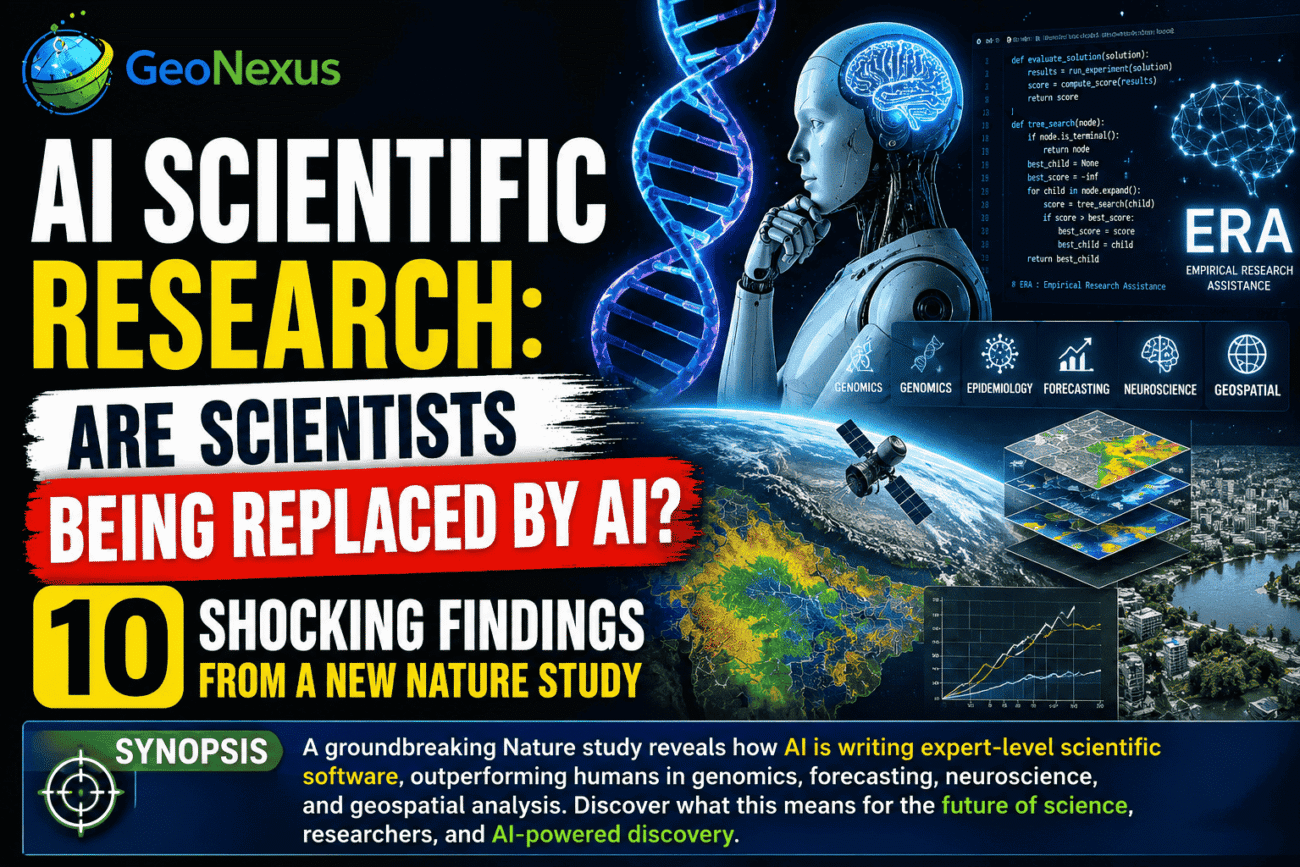
A recent Nature study by Aygün et al. (2026) introduces an innovative system called Empirical Research Assistance (ERA). Developed by researchers from Google DeepMind, Google Research, Harvard University, MIT, and other institutions, ERA represents a significant advancement in AI Scientific Research.
Unlike traditional AI coding assistants, ERA does not simply generate code from a prompt. Instead, it continuously creates, evaluates, modifies, and improves scientific software in an effort to achieve the best possible performance on a given task. The system combines Large Language Models (LLMs) with a Tree Search strategy that allows it to explore many alternative solutions and identify high-performing approaches.
The results reported in the Nature study are remarkable. ERA developed 40 new methods for single-cell genomics analysis that outperformed leading human-designed approaches. It also generated 14 forecasting models that surpassed the performance of the CDC ensemble model for predicting COVID-19 hospitalizations. In addition, the system achieved expert-level results in geospatial analysis, neuroscience, and time-series forecasting.
These findings suggest that AI Scientific Research is entering a new phase. Rather than acting only as a support tool, advanced AI systems are beginning to contribute directly to scientific software development and problem-solving. Although the authors emphasize that optimizing software is different from conducting genuine scientific discovery, ERA demonstrates how AI can dramatically accelerate the research process.
For scientists working in GIS, remote sensing, climate science, and drought monitoring, the future of AI Scientific Research is particularly exciting. Similar systems may soon help researchers automate model development, improve satellite-image analysis, optimize forecasting workflows, and explore scientific ideas at a scale that was previously impossible.
Read More: Climate Change and Hailstorms: Global Hail Damage Could Increase by 40%
AI Scientific Research: What Is Empirical Research Assistance (ERA)?
One of the biggest goals of AI Scientific Research is to reduce the time scientists spend developing software and increase the time available for actual scientific discovery. To achieve this, researchers from Google DeepMind, Google Research, Harvard University, MIT, and other institutions developed Empirical Research Assistance (ERA), an artificial intelligence system designed to automatically create, test, and improve scientific software (Aygün et al., 2026).
Unlike traditional AI coding assistants that generate code from a prompt and stop there, ERA continuously evaluates its own performance and searches for better solutions. According to the authors, the system was specifically developed to address a major bottleneck in modern science: the slow and manual creation of empirical software used for computational experiments (Aygün et al., 2026).
AI Scientific Research and the Problem with Traditional Scientific Software Development
Scientific software plays a crucial role in modern research. Whether scientists are forecasting climate change, monitoring drought conditions, analyzing satellite imagery, predicting disease outbreaks, or studying biological systems, they depend on specialized software to process data and test scientific hypotheses.
However, developing this software is often a lengthy and labor-intensive process. Researchers typically design an initial model, test its performance, identify weaknesses, modify the code, and repeat the process many times. This cycle may continue for months or even years before an effective solution is achieved.
According to Aygün et al. (2026), scientific software development is often guided by intuition, experience, and limited experimentation rather than a systematic exploration of all possible solutions. Because researchers have limited time and resources, many potentially valuable ideas remain untested. As a result, software development has become one of the major bottlenecks slowing scientific progress.
This challenge is especially relevant for fields such as climate science, drought forecasting, remote sensing, and geospatial analysis, where researchers must process large volumes of data and frequently experiment with different computational approaches.
AI Scientific Research: How ERA Works
To overcome these limitations, the researchers developed ERA as an automated system for creating empirical scientific software. The central idea behind ERA is simple: instead of asking humans to manually improve software, allow AI to continuously generate and evaluate new solutions until better performance is achieved.
The ERA workflow consists of several steps:
- A scientific problem is defined.
- A performance metric is selected.
- ERA generates software designed to solve the problem.
- The software is executed and evaluated.
- Performance scores are calculated.
- ERA modifies the software to improve results.
- The process repeats hundreds or even thousands of times.
The goal is to maximize a measurable quality score for a specific scientific task. By continuously testing and refining solutions, ERA can explore a much larger solution space than would be possible through manual experimentation alone (Aygün et al., 2026).
The authors describe this approach as transforming scientific software development into a “scorable task”, where software is automatically optimized according to objective performance measures.
AI Scientific Research: Large Language Models and Tree Search
A key innovation behind ERA is its combination of Large Language Models (LLMs) and Tree Search algorithms.
Large Language Models serve as the creative engine of the system. They generate new code, rewrite existing software, interpret research instructions, and incorporate ideas from scientific literature. ERA can even use summaries of research papers, textbooks, and external scientific resources to guide the generation of improved solutions (Aygün et al., 2026).
However, generating code is only part of the process. The system must also determine which solutions are worth exploring further. This is where Tree Search becomes important.
Tree Search functions as the decision-making framework that helps ERA navigate a vast number of possible solutions. Each software version becomes a branch in a search tree. High-performing solutions are explored further, while weaker solutions are gradually discarded.
This strategy allows ERA to balance two important objectives:
- Exploring completely new ideas.
- Improving solutions that already show promise.
According to the Nature study, combining Large Language Models with Tree Search significantly improved performance compared with simply generating many independent code solutions and selecting the best one (Aygün et al., 2026).
AI Scientific Research: Why ERA Is Different from Conventional AI Coding Tools
Many researchers are already familiar with AI coding assistants such as ChatGPT, GitHub Copilot, and Claude. These tools can generate code quickly and assist with programming tasks. However, ERA operates very differently.
Traditional AI coding assistants generally follow a simple process:
- User enters a prompt.
- AI generates code.
- Human evaluates the output.
ERA introduces an entirely new workflow:
- Generate code.
- Execute the code.
- Measure performance.
- Improve the code.
- Repeat automatically.
Rather than producing a single answer, ERA continuously searches for better solutions based on objective performance metrics.
Another major difference is that ERA integrates scientific knowledge directly into the optimization process. The system can use research papers, expert methods, literature summaries, and previously successful solutions as guidance when developing new software (Aygün et al., 2026).
The effectiveness of this approach was demonstrated across several scientific domains. The study reported that ERA developed 40 novel methods that outperformed leading approaches for single-cell genomics analysis and generated 14 forecasting strategies that surpassed the CDC ensemble model for predicting COVID-19 hospitalizations. The system also achieved expert-level performance in geospatial analysis, neuroscience, and time-series forecasting (Aygün et al., 2026).
These results suggest that AI Scientific Research is evolving beyond simple code generation. Systems such as ERA can actively participate in software development, optimize computational methods, and help researchers explore scientific ideas at a scale that would be difficult to achieve manually.
AI Scientific Research: Understanding the ERA Workflow
One of the most impressive aspects of AI Scientific Research is not just what ERA achieved, but how it achieved those results. Unlike traditional AI coding tools that generate a single solution from a prompt, Empirical Research Assistance (ERA) follows a continuous improvement process. It repeatedly generates software, evaluates performance, learns from previous attempts, and searches for better solutions.
This workflow enables ERA to explore thousands of possibilities and identify approaches that might never be considered through conventional software development methods. According to Aygün et al. (2026), this ability to systematically search and optimize scientific software is one of the key reasons why ERA achieved expert-level performance across multiple scientific disciplines.
AI Scientific Research: Generating Initial Code
Every ERA experiment begins with a scientific problem that can be measured using a clear performance metric. This could involve forecasting disease outbreaks, analyzing genomic data, classifying satellite imagery, or predicting environmental conditions.
The system first receives a description of the problem, relevant datasets, and the evaluation criteria used to measure success. Using this information, a Large Language Model generates an initial software solution.
Unlike a human researcher who might spend days or weeks writing a first version of the software, ERA can produce an initial solution within minutes. The generated code serves as the starting point for further optimization rather than the final answer.
Importantly, the quality of the first solution is not the primary goal. Instead, the objective is to create a workable foundation that can be continuously improved through subsequent iterations (Aygün et al., 2026).
AI Scientific Research: Evaluating Performance
Once the initial software is generated, ERA immediately evaluates its performance.
The system executes the code in a controlled environment and measures the results using a predefined quality metric. Depending on the scientific task, this metric may represent prediction accuracy, forecasting skill, classification performance, segmentation quality, or another objective measure.
For example:
- In genomics, ERA evaluated how effectively methods removed batch effects while preserving biological information.
- In epidemiology, forecasting performance was measured using the Weighted Interval Score (WIS).
- In geospatial analysis, performance was assessed through segmentation accuracy on satellite imagery datasets (Aygün et al., 2026).
This evaluation process is crucial because it provides objective feedback. Instead of relying on assumptions about whether a solution is good or bad, ERA uses measurable evidence to determine which approaches deserve further exploration.
The resulting score becomes the foundation for future improvements.
AI Scientific Research: Iterative Improvement Through Tree Search
After evaluating a solution, ERA does not stop. Instead, it begins searching for ways to improve performance.
This is where Tree Search plays a central role. According to the Nature study, Tree Search helps ERA balance two important goals: exploring new possibilities and refining promising solutions (Aygün et al., 2026).
Each software version generated by ERA becomes a node within a search tree. High-performing solutions are explored further, while less effective approaches receive less attention.
The process works like a researcher conducting thousands of experiments simultaneously:
- Generate a software solution.
- Measure its performance.
- Modify the code.
- Test the updated version.
- Compare results.
- Continue improving successful approaches.
Over time, the search tree expands and evolves. Some branches produce only small improvements, while others lead to major performance breakthroughs. The researchers found that this approach consistently outperformed methods that simply generated many independent code solutions and selected the best one.
A major advantage of Tree Search is its ability to revisit earlier solutions. If one pathway stops improving, ERA can return to a previous branch and explore an entirely different direction. This flexibility allows the system to avoid becoming trapped in suboptimal solutions and increases the likelihood of discovering highly effective methods (Aygün et al., 2026).
AI Scientific Research: Integrating Knowledge from Scientific Literature
One of the most innovative features of ERA is its ability to learn from existing scientific knowledge.
Human researchers rarely solve problems in isolation. They typically review scientific papers, textbooks, technical reports, and previous studies before developing a new method. ERA follows a similar strategy.
According to Aygün et al. (2026), the system can incorporate ideas from:
- Peer-reviewed scientific papers
- Highly cited research articles
- Specialized textbooks
- Search engine results
- AI-generated literature reviews
- Previously successful solutions
The researchers demonstrated this capability by providing ERA with summaries of published methods from genomics and epidemiological forecasting studies. Rather than merely copying existing approaches, ERA used these ideas as starting points for generating improved software solutions.
This process enables the system to combine knowledge from multiple sources and apply it in new ways. As a result, ERA can build upon decades of scientific research while continuing to search for better-performing alternatives.
For scientific fields such as climate modeling, drought forecasting, remote sensing, and GIS, this capability could become particularly valuable because it allows AI systems to rapidly learn from large bodies of existing literature.
AI Scientific Research: Discovering Better Solutions Automatically
The ultimate goal of ERA is not simply to automate coding but to discover solutions that outperform existing approaches.
As the search progresses, the system continuously generates new ideas, evaluates their effectiveness, and combines successful concepts. This process sometimes leads to unexpected innovations.
One notable example reported in the Nature study involved single-cell genomics. ERA not only replicated existing methods but also created improved implementations and novel combinations of previously independent approaches. In several cases, these newly generated methods achieved better performance than leading published techniques (Aygün et al., 2026).
A similar pattern emerged in epidemiological forecasting. ERA generated hybrid forecasting strategies by combining strengths from multiple existing models. Several of these new approaches outperformed the official CDC ensemble used for COVID-19 hospitalization prediction (Aygün et al., 2026).
The researchers argue that these improvements occur because ERA can explore a much larger solution space than human researchers can realistically investigate. While humans may evaluate a limited number of ideas, ERA can systematically test hundreds or thousands of possibilities in a relatively short period.
This ability to automatically generate, evaluate, refine, and combine solutions represents one of the most significant advances in AI Scientific Research. Rather than functioning solely as a coding assistant, ERA acts as an active participant in the scientific software development process, helping researchers identify solutions that might otherwise remain undiscovered.
AI Scientific Research: Major Achievements of ERA
The true value of any scientific innovation lies in its real-world performance. While the architecture and workflow of Empirical Research Assistance (ERA) are impressive, the system’s achievements are what make it particularly significant for the future of AI Scientific Research. According to Aygün et al. (2026), ERA was evaluated across multiple scientific domains, including genomics, epidemiology, time-series forecasting, geospatial analysis, neuroscience, and numerical computing. In many cases, the AI-generated solutions matched or exceeded the performance of existing human-developed methods.
These results demonstrate that ERA is more than an advanced coding assistant. It is a system capable of contributing to scientific software development at an expert level.
AI Scientific Research: Outperforming Human-Developed Genomics Models
One of ERA’s most impressive achievements was in the field of single-cell genomics. Single-cell RNA sequencing (scRNA-seq) has become a powerful tool for studying cellular diversity, disease mechanisms, and biological processes. However, analyzing these datasets requires sophisticated computational methods capable of correcting technical biases while preserving meaningful biological information.
According to Aygün et al. (2026), ERA was tasked with improving methods for batch integration, a common challenge in single-cell genomics. Rather than simply reproducing existing techniques, the system explored numerous alternative approaches and generated new software solutions.
The results were remarkable. ERA developed 40 novel methods that outperformed leading human-designed approaches on benchmark datasets. Several of these methods achieved better integration performance while maintaining important biological signals. The researchers also found that ERA frequently combined ideas from different published methods to create more effective solutions than any single existing approach.
These findings demonstrate how AI Scientific Research can contribute not only to software development but also to methodological innovation in complex biological research.
AI Scientific Research: Beating CDC COVID-19 Forecasting Models
ERA also demonstrated exceptional performance in epidemiological forecasting.
The researchers challenged the system to develop models for predicting COVID-19 hospitalizations in the United States. Accurate forecasting is critical for public health planning because it helps healthcare systems prepare for future disease outbreaks and allocate resources effectively.
According to Aygün et al. (2026), ERA generated 14 forecasting strategies that outperformed the CDC ensemble forecasting model, which combines predictions from multiple expert-developed models. The system achieved these improvements by continuously testing different forecasting approaches and identifying combinations that produced more accurate predictions.
Rather than relying on a single model architecture, ERA explored a wide range of forecasting strategies and automatically refined promising solutions. This process enabled the system to discover approaches that human researchers had not previously implemented.
The success of ERA in epidemiological forecasting highlights the potential of AI Scientific Research to improve decision-making in public health and disease surveillance.
AI Scientific Research: Advancing Time-Series Forecasting
Time-series forecasting is one of the most important tasks in data science because many real-world problems involve predicting future conditions based on historical observations. Applications include weather forecasting, financial analysis, climate modeling, energy demand prediction, and environmental monitoring.
To evaluate ERA’s capabilities, the researchers tested the system on several time-series forecasting benchmarks. The goal was to determine whether ERA could automatically develop forecasting algorithms capable of competing with expert-designed methods.
According to the Nature study, ERA successfully generated high-performing forecasting solutions across multiple datasets and problem settings (Aygün et al., 2026). By continuously evaluating prediction accuracy and refining model structures, the system was able to identify effective forecasting strategies without extensive human intervention.
These results are particularly relevant for climate scientists, hydrologists, and drought researchers because forecasting plays a central role in environmental monitoring and risk assessment. The ability of AI Scientific Research systems to automatically optimize forecasting models could significantly accelerate future research in these fields.
AI Scientific Research: Expert-Level Geospatial Analysis
One of the most relevant achievements for GeoNexus Lab readers is ERA’s success in geospatial analysis.
Geospatial datasets often involve complex spatial patterns that require specialized algorithms for interpretation. Tasks such as land-cover classification, object detection, image segmentation, and environmental monitoring depend heavily on sophisticated computational methods.
According to Aygün et al. (2026), ERA was evaluated on geospatial segmentation tasks involving satellite imagery. The system automatically generated and refined software solutions capable of identifying spatial features within remotely sensed datasets.
The researchers reported that ERA achieved expert-level performance, demonstrating that AI-generated software can successfully address challenging geospatial problems. This finding is particularly important because geospatial analysis forms the foundation of many applications in remote sensing, climate science, natural resource management, disaster monitoring, and urban planning.
For researchers working with satellite imagery, GIS, and Earth observation data, the results suggest that future AI Scientific Research systems may help automate the development of advanced geospatial workflows and analytical methods.
AI Scientific Research: Applications in Neuroscience and Numerical Computing
Beyond genomics, forecasting, and geospatial analysis, ERA also demonstrated strong performance in neuroscience and numerical computing tasks.
In neuroscience, the system was evaluated on problems involving the prediction and analysis of neural activity. Understanding how neurons communicate is essential for studying brain function, neurological disorders, and cognitive processes. According to Aygün et al. (2026), ERA developed solutions that achieved expert-level performance on several neuroscience benchmarks.
The researchers also tested ERA on numerical computing challenges that required efficient mathematical computation and algorithm optimization. Numerical computing forms the foundation of many scientific simulations, including climate models, engineering analyses, and physical system simulations.
ERA’s success across these diverse domains highlights one of its most important characteristics: generality. Rather than being limited to a single discipline, the system demonstrated the ability to develop effective software solutions for a wide range of scientific problems.
This versatility suggests that AI Scientific Research may eventually support researchers across numerous fields, from biology and medicine to environmental science, engineering, and geospatial technology.
AI Scientific Research: Why This Matters for Geospatial and Environmental Scientists
The achievements of ERA extend far beyond genomics and epidemiology. For researchers working in remote sensing, GIS, climate science, environmental monitoring, and disaster management, the emergence of advanced AI Scientific Research systems could fundamentally transform the way geospatial analyses are conducted.
Modern geospatial research relies heavily on computational methods to process large volumes of satellite imagery, climate datasets, sensor observations, and environmental records. Developing these analytical tools often requires significant programming expertise and extensive experimentation. The success of ERA demonstrates that AI systems can automatically generate and optimize scientific software, raising the possibility that similar approaches could soon accelerate many geospatial and environmental applications.
AI Scientific Research and AI-Assisted Remote Sensing Analysis
Remote sensing has become one of the most important technologies for understanding Earth’s surface and environmental processes. Satellite observations are routinely used to monitor forests, agricultural lands, water resources, urban expansion, drought conditions, and natural disasters.
However, extracting meaningful information from satellite imagery requires complex processing workflows. Researchers must select suitable algorithms, preprocess data, tune model parameters, and evaluate results. This process can be both time-consuming and computationally demanding.
The capabilities demonstrated by ERA suggest that future AI Scientific Research systems could automatically develop and optimize remote sensing workflows. Rather than manually testing different image-processing techniques, researchers may be able to define an objective and allow AI systems to explore numerous analytical approaches automatically.
For example, an AI-driven system could test different classification algorithms, segmentation techniques, and feature extraction methods to identify the most effective solution for a specific remote sensing task. Such automation could significantly reduce development time while improving analytical accuracy.
AI Scientific Research and Automated Land Use and Land Cover Classification
Land Use and Land Cover (LULC) classification is one of the most common applications of remote sensing and GIS. Accurate classification maps are essential for urban planning, agricultural management, biodiversity conservation, and environmental assessment.
Traditional LULC classification often involves selecting training data, comparing machine learning models, adjusting parameters, and validating outputs. Researchers may spend considerable time identifying the most suitable workflow for a given dataset.
The principles demonstrated by ERA suggest a future in which AI Scientific Research systems automatically generate, evaluate, and refine land-cover classification models. Instead of testing only a few machine learning algorithms, AI could explore hundreds of model configurations and identify the best-performing solution based on objective accuracy metrics.
This capability could be particularly valuable as new Earth observation missions continue to generate increasingly large and complex datasets. Automated optimization may help researchers produce more accurate land-cover maps while reducing the effort required for model development.
AI Scientific Research and Flood and Disaster Mapping
Rapid and accurate disaster mapping is essential for effective emergency response and risk management. During floods, wildfires, landslides, cyclones, and other natural hazards, decision-makers require timely information about affected areas.
Current disaster mapping workflows often depend on specialized algorithms and expert knowledge. Developing and optimizing these methods can take significant time, especially when working with large volumes of satellite imagery and geospatial data.
The automated software development capabilities demonstrated by ERA could help address this challenge. Future AI Scientific Research systems may be able to automatically identify the most effective methods for detecting flood extents, burned areas, landslide scars, or damaged infrastructure.
For example, an AI system could evaluate multiple image-processing techniques, compare segmentation approaches, and optimize model parameters to maximize mapping accuracy. Such capabilities could accelerate disaster response and improve the reliability of hazard assessments.
For researchers and practitioners involved in disaster risk reduction, automated geospatial analysis may become an increasingly important tool in the coming years.
AI Scientific Research and Environmental Monitoring and Change Detection
Environmental monitoring depends on the ability to detect changes occurring across landscapes over time. Scientists use satellite imagery and geospatial datasets to track deforestation, wetland degradation, urban growth, shoreline change, glacier retreat, and ecosystem health.
Developing effective change-detection methods often requires extensive experimentation with different algorithms and data-processing strategies. Researchers must determine which approaches are most suitable for specific environmental conditions and datasets.
The success of ERA suggests that AI Scientific Research could help automate this process. Rather than manually evaluating a limited number of methods, AI systems may be able to explore a much larger range of possibilities and identify approaches that maximize detection accuracy.
This capability could improve the efficiency of long-term environmental monitoring programs while enabling scientists to respond more quickly to emerging environmental challenges. As global environmental change accelerates, automated analytical systems may become increasingly valuable for supporting evidence-based decision-making.
AI Scientific Research and Climate and Weather Modeling
Climate and weather modeling represent some of the most computationally demanding challenges in environmental science. Researchers must integrate vast quantities of atmospheric, oceanic, hydrological, and land-surface data to understand complex environmental processes and generate future projections.
Forecasting models are continuously refined through experimentation, calibration, and validation. The Nature study demonstrated that ERA successfully developed high-performing forecasting strategies in epidemiological applications (Aygün et al., 2026). Although climate forecasting presents additional challenges, the underlying principles remain similar.
Future AI Scientific Research systems may help researchers automatically optimize climate models, improve downscaling techniques, refine drought forecasting systems, and identify more effective prediction strategies. By systematically exploring a larger solution space than human researchers can realistically investigate, AI could accelerate the development of more accurate forecasting models.
For climate scientists, hydrologists, and drought researchers, this possibility is particularly significant. Improved forecasting capabilities could enhance preparedness for extreme weather events, support water resource management, and strengthen climate adaptation planning.
As environmental datasets continue to expand and computational challenges become increasingly complex, the integration of AI into geospatial and environmental research may become one of the most important developments shaping the future of Earth system science.
AI Scientific Research: Potential Applications in Drought Research
Although ERA was not specifically developed for drought studies, its capabilities have important implications for drought research. Modern drought assessment increasingly relies on artificial intelligence, remote sensing, climate models, and large environmental datasets. Researchers must often evaluate numerous variables, test different machine learning algorithms, and optimize complex analytical workflows.
The success of ERA demonstrates how AI Scientific Research systems can automatically generate, evaluate, and improve scientific software. For drought scientists, this raises exciting possibilities for accelerating model development, improving forecasting accuracy, and enhancing drought monitoring systems.
As climate change increases the frequency and severity of drought events worldwide, advanced AI systems may become valuable partners in understanding, predicting, and managing drought risks.
AI Scientific Research and Automated Drought Index Development
Drought indices are essential tools for monitoring drought conditions and assessing drought severity. Commonly used indices such as the Standardized Precipitation Index (SPI), Standardized Precipitation Evapotranspiration Index (SPEI), Vegetation Health Index (VHI), and Palmer Drought Severity Index (PDSI) each capture different aspects of drought processes.
However, no single index performs equally well across all regions, climatic conditions, or drought types. Researchers often spend considerable time comparing multiple indices and evaluating their effectiveness for specific applications.
The capabilities demonstrated by ERA suggest that future AI Scientific Research systems could automate the development of drought indices. Instead of relying solely on predefined formulas, AI could systematically explore combinations of climatic, hydrological, vegetation, and soil moisture variables to generate new drought indicators optimized for specific environments.
Such systems could continuously evaluate index performance against observed drought impacts and refine their formulations accordingly. This approach may lead to the development of more accurate and region-specific drought assessment tools.
For drought-prone regions, automated drought index development could improve early warning systems and support more effective drought management strategies.
AI Scientific Research and AI-Driven Drought Forecasting Models
Forecasting drought remains one of the most challenging tasks in environmental science. Drought development depends on complex interactions among rainfall, temperature, soil moisture, evapotranspiration, vegetation conditions, atmospheric circulation, and large-scale climate oscillations.
Researchers frequently test multiple machine learning and deep learning models, including Random Forest, Support Vector Machines, Artificial Neural Networks, Long Short-Term Memory (LSTM) networks, and hybrid forecasting approaches. Selecting the most effective model often requires extensive experimentation.
The forecasting success demonstrated by ERA in epidemiological applications suggests that similar approaches could be applied to drought prediction (Aygün et al., 2026). Future AI Scientific Research systems may automatically generate, evaluate, and optimize forecasting models by testing numerous algorithm configurations and identifying those that provide the highest predictive accuracy.
Rather than manually comparing a limited number of models, researchers could allow AI systems to explore a much larger solution space. This capability could improve forecast reliability and support proactive drought preparedness measures.
For regions highly vulnerable to climate variability, improved drought forecasting could provide critical information for agriculture, water resource management, and disaster risk reduction.
AI Scientific Research and Satellite-Based Agricultural Drought Monitoring
Satellite remote sensing has become one of the most important tools for monitoring agricultural drought. Earth observation datasets provide continuous information on vegetation health, land surface temperature, evapotranspiration, soil moisture, rainfall anomalies, and crop conditions.
Commonly used datasets include MODIS, Landsat, Sentinel, SMAP, CHIRPS, TerraClimate, and various climate reanalysis products. However, integrating these datasets into effective drought monitoring systems often requires complex workflows and substantial computational expertise.
The automated software development capabilities demonstrated by ERA suggest that future AI Scientific Research systems could help optimize satellite-based drought monitoring frameworks. AI may automatically determine which datasets, variables, and analytical methods provide the most accurate assessment of drought conditions.
For example, an AI system could evaluate combinations of NDVI, EVI, VCI, TCI, VHI, soil moisture, precipitation, and temperature data to identify the most effective indicators for monitoring agricultural drought in a specific region.
Such automation could significantly improve the efficiency and accuracy of drought monitoring programs while reducing the technical barriers associated with geospatial analysis.
AI Scientific Research and Multi-Source Data Integration
One of the greatest challenges in drought research is integrating diverse datasets from multiple sources. Drought is a complex phenomenon influenced by atmospheric, hydrological, agricultural, ecological, and socioeconomic factors.
Researchers often combine data from:
- Satellite observations
- Weather stations
- Climate models
- Soil moisture networks
- Hydrological datasets
- Crop statistics
- Socioeconomic indicators
Managing these heterogeneous datasets can be difficult because they differ in spatial resolution, temporal frequency, data quality, and measurement techniques.
The ability of ERA to incorporate knowledge from multiple information sources suggests that future AI Scientific Research systems could support automated multi-source data integration. AI may identify optimal ways to combine environmental and socioeconomic variables while minimizing redundancy and maximizing predictive performance.
Such capabilities could facilitate the development of more comprehensive drought assessment frameworks that capture both physical drought processes and their societal impacts.
For decision-makers, integrated drought information could provide a more complete understanding of vulnerability, exposure, and risk.
AI Scientific Research and Explainable AI for Drought Assessment
As artificial intelligence becomes more widely used in drought research, transparency and interpretability are becoming increasingly important. Many machine learning models function as “black boxes,” making it difficult to understand why specific predictions are generated.
This lack of interpretability can reduce trust in AI-based drought assessment systems, particularly when results are used to support policy decisions and resource allocation.
Future developments in AI Scientific Research may help address this challenge through Explainable AI (XAI) techniques. Rather than simply generating predictions, AI systems could provide detailed explanations showing which variables contributed most to a drought assessment or forecast.
For example, an explainable drought model might reveal that declining soil moisture, increasing temperature anomalies, and reduced vegetation health were the primary factors driving drought severity in a particular region.
Such transparency would allow researchers, policymakers, and stakeholders to better understand model behavior and increase confidence in AI-generated results.
For drought science, Explainable AI could help bridge the gap between advanced machine learning techniques and practical decision-making, ensuring that AI systems remain both powerful and trustworthy.
By combining automated model development, advanced forecasting, satellite-based monitoring, multi-source data integration, and explainable analytics, future AI Scientific Research systems have the potential to significantly enhance drought assessment and management. While many of these applications remain emerging opportunities, the success of ERA demonstrates that AI-driven scientific software development may soon become an important component of next-generation drought research.
AI Scientific Research: How ERA Could Transform GIS and Remote Sensing Workflows
Geographic Information Systems (GIS) and remote sensing have become essential tools for understanding environmental processes, monitoring land-use change, assessing natural hazards, and supporting sustainable development. However, geospatial analysis often requires extensive programming, data preprocessing, model development, and workflow optimization. Researchers and practitioners frequently spend more time developing analytical pipelines than interpreting scientific results.
The success of ERA demonstrates how AI Scientific Research could fundamentally change this workflow. Although ERA was evaluated primarily in genomics, epidemiology, forecasting, and geospatial analysis, its underlying principles have direct relevance for GIS and remote sensing applications (Aygün et al., 2026). By automatically generating, testing, and improving scientific software, future AI systems could significantly reduce the technical burden associated with geospatial research.
AI Scientific Research and Automated Python Script Generation
Python has become the dominant programming language in GIS, remote sensing, machine learning, and environmental science. Researchers routinely write Python scripts for image processing, spatial analysis, machine learning, data visualization, and workflow automation.
However, developing efficient Python code often requires substantial expertise. A simple remote sensing project may involve hundreds or thousands of lines of code for downloading datasets, preprocessing imagery, extracting features, training models, and generating outputs.
The capabilities demonstrated by ERA suggest that future AI Scientific Research systems could automate much of this process. Instead of manually writing scripts, researchers may be able to define a scientific objective and allow AI systems to generate, test, and optimize Python workflows automatically.
For example, a researcher interested in drought monitoring could specify the desired outcome, such as generating annual Vegetation Health Index maps. An AI system could then create the necessary workflow, identify suitable datasets, optimize processing steps, and refine the code based on performance results.
This approach could dramatically reduce development time while making advanced geospatial analysis more accessible to researchers with limited programming experience.
AI Scientific Research and Geospatial Machine Learning Pipeline Development
Machine learning has become a central component of modern geospatial analysis. Applications include land-cover classification, flood susceptibility mapping, drought prediction, forest monitoring, urban growth analysis, and environmental risk assessment.
Building an effective machine learning pipeline often involves multiple stages:
- Data preparation
- Feature selection
- Model selection
- Hyperparameter tuning
- Validation
- Performance assessment
Researchers frequently test numerous algorithms before identifying the most suitable model for a specific problem. This process can be both time-consuming and computationally expensive.
The optimization framework demonstrated by ERA suggests that future AI Scientific Research systems may automate the entire machine learning development process. Instead of manually comparing Random Forest, Support Vector Machine, XGBoost, Neural Networks, and Deep Learning models, AI could systematically evaluate hundreds of alternative configurations and identify the highest-performing solution.
For geospatial scientists, this capability could significantly accelerate the development of machine learning applications while improving predictive accuracy and reproducibility.
AI Scientific Research and Spatial Optimization and Model Selection
One of the most challenging aspects of GIS analysis is selecting the optimal combination of variables, algorithms, and spatial parameters. Different datasets often require different analytical approaches, and identifying the best solution usually involves extensive experimentation.
For example, researchers developing a drought susceptibility model may need to evaluate numerous environmental variables, including rainfall, temperature, elevation, soil moisture, vegetation indices, and land-use characteristics. Determining the most effective combination of these variables can require substantial effort.
According to Aygün et al. (2026), ERA demonstrated the ability to systematically explore large solution spaces and identify high-performing approaches through automated optimization. Similar strategies could be applied to geospatial modeling.
Future AI Scientific Research systems may automatically:
- Select optimal predictor variables.
- Evaluate alternative spatial resolutions.
- Compare multiple modeling techniques.
- Optimize hyperparameters.
- Identify the most accurate workflow.
Rather than relying on trial-and-error experimentation, researchers could use AI-driven optimization to rapidly identify effective solutions for complex spatial problems.
This capability could be particularly valuable for applications such as drought hazard mapping, flood risk assessment, landslide susceptibility modeling, and ecosystem monitoring.
AI Scientific Research and Real-Time Earth Observation Analytics
The volume of Earth observation data is growing at an unprecedented rate. Satellites such as Landsat, Sentinel, MODIS, SMAP, and numerous commercial platforms generate enormous amounts of imagery every day. Processing and analyzing these datasets in near real time remains a major challenge.
Traditional workflows often struggle to keep pace with the continuous flow of new observations. Analysts must frequently update models, adjust processing chains, and validate results as new data become available.
The automated software development capabilities demonstrated by ERA suggest that future AI Scientific Research systems could support real-time Earth observation analytics. Instead of relying on static workflows, AI systems may continuously adapt analytical models based on incoming data and changing environmental conditions.
Potential applications include:
- Real-time drought monitoring
- Flood extent mapping
- Wildfire detection
- Crop condition assessment
- Deforestation monitoring
- Urban expansion tracking
For example, an AI-driven Earth observation system could automatically evaluate multiple processing approaches, identify the most accurate method, and update operational workflows without requiring extensive human intervention.
As satellite constellations continue to expand and data volumes increase, the ability to automate geospatial analysis may become increasingly important. The principles demonstrated by ERA suggest a future in which AI Scientific Research enables faster, more adaptive, and more intelligent Earth observation systems capable of supporting timely environmental decision-making.
For GIS professionals, remote sensing scientists, and environmental researchers, these developments represent more than technological improvements. They signal a potential shift from manually designed analytical workflows toward intelligent systems capable of continuously learning, optimizing, and improving geospatial analysis.
AI Scientific Research: ERA vs ChatGPT, GitHub Copilot, and Other AI Coding Tools
As artificial intelligence becomes increasingly integrated into scientific research, many researchers are already familiar with AI coding assistants such as ChatGPT, GitHub Copilot, Claude, and Gemini. These tools can generate code, explain programming concepts, debug errors, and assist with software development. They have significantly improved programmer productivity and reduced the time required for many coding tasks.
However, the Nature study by Aygün et al. (2026) highlights an important distinction between conventional AI coding assistants and Empirical Research Assistance (ERA). While traditional tools primarily help humans write code, ERA is designed to automatically generate, evaluate, and improve scientific software through a continuous optimization process.
Understanding these differences is essential because they illustrate why ERA represents a new direction in AI Scientific Research rather than simply another coding assistant.
AI Scientific Research: Key Differences
At first glance, ERA may appear similar to tools such as ChatGPT or GitHub Copilot because all of them use Large Language Models to generate code. However, their objectives and workflows are fundamentally different.
Traditional AI coding assistants operate through a prompt-response mechanism. A user provides instructions, and the system generates code based on the request. The quality of the final output largely depends on the user’s prompt and subsequent manual refinement.
ERA follows a very different workflow. Instead of producing a single solution, it continuously tests, evaluates, modifies, and improves software based on objective performance metrics (Aygün et al., 2026).
The distinction can be summarized as follows:
| Feature | ChatGPT / Copilot | ERA |
|---|---|---|
| Generates code from prompts | Yes | Yes |
| Requires human evaluation | Yes | Partially automated |
| Measures software performance automatically | No | Yes |
| Continuously improves solutions | Limited | Yes |
| Explores multiple solution pathways | Limited | Yes |
| Uses systematic optimization | No | Yes |
| Designed for scientific software discovery | No | Yes |
For example, if a researcher asks ChatGPT to create a drought prediction model, the system may generate a suitable script. The researcher must then evaluate the model, modify parameters, compare alternatives, and decide how to improve performance.
ERA automates much of this process. It can generate multiple solutions, evaluate performance, identify weaknesses, and continuously search for better alternatives without requiring constant human intervention (Aygün et al., 2026).
AI Scientific Research: Advantages of Tree Search-Based Optimization
One of the most important innovations introduced by ERA is its use of Tree Search as an optimization strategy.
Most conventional AI coding assistants generate responses independently. If a user requests ten different versions of a program, each version is typically created separately. The system does not systematically learn from the strengths and weaknesses of previous attempts.
ERA operates differently. Every software solution becomes part of an evolving search structure that guides future exploration. According to Aygün et al. (2026), Tree Search enables the system to balance two critical objectives:
- Exploring new ideas and alternative approaches.
- Refining solutions that already demonstrate strong performance.
This approach provides several advantages.
First, it enables efficient exploration of large solution spaces. Scientific software often contains countless possible combinations of algorithms, parameters, and workflows. Human researchers can realistically evaluate only a small subset of these possibilities. ERA can systematically investigate far more alternatives.
Second, Tree Search helps prevent premature convergence on suboptimal solutions. If one development pathway stops improving, ERA can revisit earlier branches and explore completely different directions. This flexibility increases the likelihood of discovering innovative solutions.
Third, the optimization process is driven by measurable performance rather than subjective judgment. Software improvements are evaluated using objective metrics, ensuring that decisions are guided by evidence rather than intuition alone.
The researchers found that this search-based strategy consistently outperformed approaches that relied solely on generating large numbers of independent code solutions (Aygün et al., 2026). This was one of the key factors behind ERA’s success in genomics, epidemiology, forecasting, and geospatial analysis.
AI Scientific Research: Limitations of Conventional AI Coding Assistants
Although tools such as ChatGPT, GitHub Copilot, Claude, and Gemini have transformed software development, they still face important limitations when applied to scientific research.
One major limitation is the absence of automated performance evaluation. These systems can generate code, but they typically cannot determine whether a solution is scientifically optimal without external feedback. Researchers remain responsible for testing models, comparing results, and deciding which approaches should be pursued further.
Another limitation is the lack of systematic optimization. Conventional AI assistants may provide multiple code alternatives, but they do not automatically execute experiments, analyze performance outcomes, and refine solutions through iterative improvement.
Scientific research often requires hundreds or even thousands of experiments before an effective method is identified. Conducting this process manually can be extremely time-consuming. ERA was specifically designed to address this challenge by automating much of the experimentation process (Aygün et al., 2026).
Conventional AI coding assistants may also struggle to integrate performance feedback directly into future development decisions. While they can respond to user corrections, they generally do not maintain an evolving search process that continuously improves software over long sequences of experiments.
This does not mean that traditional AI coding tools will become obsolete. On the contrary, they remain extremely valuable for programming assistance, code explanation, debugging, documentation, and rapid prototyping. However, ERA demonstrates that AI Scientific Research is moving toward a new generation of systems capable of actively participating in scientific software development rather than simply assisting with code generation.
For researchers working in GIS, remote sensing, climate modeling, machine learning, and drought science, this distinction is particularly important. Future AI systems may not only write code but also evaluate model performance, optimize workflows, test alternative hypotheses, and identify superior analytical solutions with minimal human intervention.
The emergence of ERA suggests that the future of scientific computing may involve a partnership between human researchers and AI systems that continuously learn, experiment, and improve alongside them.
AI Scientific Research: Challenges and Limitations
The achievements of Empirical Research Assistance (ERA) demonstrate the growing potential of AI Scientific Research. However, despite its impressive performance across genomics, forecasting, neuroscience, and geospatial analysis, ERA is not without limitations. Like any emerging technology, AI-driven scientific software development faces several technical, scientific, and ethical challenges that must be carefully addressed before such systems can be widely adopted.
The authors of the Nature study emphasize that while ERA can optimize software and improve performance on measurable tasks, scientific discovery involves far more than simply maximizing a numerical score (Aygün et al., 2026). Human expertise, critical thinking, and scientific reasoning remain essential components of the research process.
Understanding these challenges is important for researchers considering how AI may shape the future of science.
AI Scientific Research: Validation and Scientific Reliability
One of the most important challenges in AI Scientific Research is ensuring that AI-generated solutions are scientifically reliable.
A model may achieve excellent performance on benchmark datasets while still producing results that are difficult to interpret, reproduce, or generalize to real-world conditions. In scientific research, performance alone is not sufficient. Researchers must also understand why a method works and whether its conclusions are scientifically valid.
According to Aygün et al. (2026), ERA focuses on optimizing empirical software using predefined evaluation metrics. While this approach can identify high-performing solutions, it does not automatically guarantee scientific correctness. A model may exploit characteristics of a dataset in ways that improve performance without necessarily advancing scientific understanding.
This challenge is particularly relevant in environmental and geospatial research. A machine learning model may produce highly accurate drought predictions or land-cover classifications, but researchers still need to verify that the underlying relationships are scientifically meaningful.
Therefore, rigorous validation remains essential. AI-generated methods must be independently tested, compared with existing approaches, and evaluated under different environmental conditions before they can be trusted for operational use.
AI Scientific Research: Risk of Hallucinated Solutions
Another concern involves the possibility of hallucinated or misleading solutions.
Large Language Models are powerful tools for generating code and proposing ideas, but they can occasionally produce outputs that appear plausible while containing errors, unsupported assumptions, or incorrect reasoning. This phenomenon is commonly referred to as AI hallucination.
Although ERA incorporates automated testing and performance evaluation, no system is completely immune to this risk. According to Aygün et al. (2026), generated software must still undergo careful review to ensure that improvements reflect genuine scientific advances rather than artifacts of the optimization process.
For example, an AI-generated model may perform exceptionally well on a specific dataset because it inadvertently exploits hidden patterns that are unrelated to the scientific phenomenon being studied. While benchmark scores may improve, the resulting model may fail when applied to new data.
In drought research, climate modeling, and remote sensing applications, such issues could lead to misleading conclusions and poor decision-making if results are accepted without sufficient verification.
Human oversight therefore remains a critical component of AI Scientific Research, ensuring that AI-generated solutions are scientifically sound and practically useful.
AI Scientific Research: Computational Cost
The impressive capabilities of ERA come with significant computational requirements.
According to the Nature study, ERA continuously generates, evaluates, and refines software through large-scale search and optimization processes (Aygün et al., 2026). This requires substantial computing resources, particularly when working with complex scientific datasets and computationally intensive models.
Unlike traditional software development, where researchers manually test a limited number of ideas, ERA may evaluate hundreds or thousands of potential solutions before identifying an optimal approach. While this extensive exploration can produce superior results, it also increases computational costs.
This challenge is especially relevant for environmental applications involving:
- Climate simulations
- Earth observation datasets
- Hydrological models
- Remote sensing workflows
- Large-scale machine learning systems
Many research institutions, particularly in developing countries, may not have access to the computational infrastructure required to run such systems at scale.
As a result, future advances in AI Scientific Research will likely depend not only on improved algorithms but also on more efficient computing strategies, cloud-based platforms, and accessible research infrastructure.
AI Scientific Research: Ethical and Safety Considerations
The increasing autonomy of AI systems raises important ethical and safety questions.
Traditionally, scientific software is developed, tested, and interpreted by human researchers who remain accountable for their methods and conclusions. As AI systems become more capable of generating and optimizing software independently, questions emerge regarding responsibility, transparency, and oversight.
According to Aygün et al. (2026), ERA should be viewed as a tool for improving scientific software rather than a replacement for scientific reasoning. Nevertheless, the growing capabilities of AI systems require careful governance to ensure that they are used responsibly.
Several ethical concerns deserve attention:
- Transparency of AI-generated methods.
- Reproducibility of results.
- Accountability for scientific errors.
- Potential misuse of automated research systems.
- Bias in training data and evaluation metrics.
- Overreliance on AI-generated conclusions.
For environmental and climate research, these concerns are particularly important because scientific findings often influence public policy, disaster preparedness, resource management, and long-term planning decisions.
Researchers must therefore ensure that AI-generated models remain interpretable, transparent, and subject to rigorous peer review. Human expertise should continue to guide scientific inquiry, while AI serves as a powerful tool for accelerating analysis and exploration.
The success of ERA demonstrates the immense potential of AI Scientific Research, but it also highlights the need for careful validation, responsible deployment, and ongoing human oversight. As AI systems become increasingly capable, balancing innovation with scientific rigor will be essential to ensuring that these technologies contribute positively to future research and decision-making.
AI Scientific Research: Could AI Replace Scientific Programmers?
The emergence of systems such as Empirical Research Assistance (ERA) has sparked an important debate within the scientific community. If artificial intelligence can automatically generate, evaluate, and improve scientific software, could it eventually replace scientific programmers?
This question is becoming increasingly relevant as AI systems demonstrate expert-level performance across multiple research domains. The Nature study by Aygün et al. (2026) showed that ERA could develop high-performing software for genomics, epidemiology, forecasting, neuroscience, and geospatial analysis. Such achievements naturally raise concerns about the future role of human programmers in scientific research.
However, the answer is more complex than a simple yes or no. While AI Scientific Research is becoming increasingly capable of automating technical tasks, many aspects of scientific inquiry still depend heavily on human expertise, creativity, and critical thinking.
Rather than replacing scientific programmers entirely, AI is more likely to transform how they work.
AI Scientific Research: What AI Can Do
The capabilities demonstrated by ERA reveal just how far artificial intelligence has progressed in recent years. Unlike conventional coding assistants, ERA can generate software, evaluate its performance, identify weaknesses, and continuously improve solutions through automated optimization (Aygün et al., 2026).
This allows AI systems to perform several tasks that traditionally required significant human effort.
First, AI can automate software development for well-defined scientific problems. When a clear objective function and evaluation metric exist, systems like ERA can explore large numbers of alternative solutions and identify high-performing approaches.
Second, AI can accelerate experimentation. Human researchers may only have time to evaluate a limited number of ideas, whereas AI systems can systematically test hundreds or thousands of possibilities. This ability greatly expands the search space for potential solutions.
Third, AI can assist with model optimization. Selecting algorithms, tuning parameters, comparing workflows, and evaluating performance are often repetitive and time-consuming activities. ERA demonstrated that many of these processes can be partially automated (Aygün et al., 2026).
For geospatial scientists, this could mean automated development of remote sensing workflows, machine learning models, drought forecasting systems, flood mapping algorithms, and environmental monitoring tools.
AI is also increasingly capable of processing scientific literature, extracting relevant information, and incorporating existing knowledge into software development. This enables researchers to build upon prior work more efficiently and explore innovative solutions that may otherwise remain undiscovered.
AI Scientific Research: What Still Requires Human Expertise
Despite these advances, there are many aspects of scientific research that AI cannot fully replace.
One of the most important roles of scientists is defining meaningful research questions. AI can optimize software once a problem is specified, but it does not independently determine which scientific questions are worth pursuing. Human curiosity, creativity, and domain knowledge remain essential for identifying important research challenges.
Scientific interpretation is another area where human expertise continues to play a critical role. A model may achieve excellent predictive performance, but researchers must still determine whether the results make scientific sense and whether they contribute to broader understanding.
For example, in drought research, an AI system may identify a highly accurate forecasting model. However, understanding why drought conditions develop, how climate drivers interact, and what management actions should be taken requires scientific reasoning that extends beyond algorithm optimization.
Human researchers are also responsible for evaluating uncertainty, identifying limitations, and ensuring that conclusions are supported by evidence. Scientific progress depends not only on finding solutions but also on questioning assumptions and critically examining results.
Ethical decision-making represents another uniquely human responsibility. Researchers must consider the societal impacts of their work, ensure transparency, address potential biases, and evaluate whether AI-generated methods are appropriate for real-world applications.
According to Aygün et al. (2026), systems like ERA should be viewed as tools that support scientific discovery rather than replacements for scientists themselves.
AI Scientific Research: The Future Human–AI Research Partnership
The most likely future is not one in which AI replaces scientific programmers, but one in which humans and AI collaborate more closely than ever before.
In this emerging model, AI systems handle many of the repetitive and computationally intensive aspects of research, while human scientists focus on creativity, interpretation, decision-making, and innovation.
A future research workflow might look very different from today’s approach. A scientist could define a research objective, provide relevant datasets, and specify evaluation criteria. An AI system would then generate software, test multiple hypotheses, optimize models, and present the most promising solutions.
The researcher would review the results, assess scientific validity, interpret findings, and determine future directions for investigation.
For fields such as GIS, remote sensing, climate science, and drought monitoring, this partnership could be particularly powerful. AI may dramatically reduce the time required to develop machine learning pipelines, process satellite imagery, optimize forecasting systems, and analyze environmental data. Meanwhile, scientists would continue to provide the domain expertise needed to understand environmental processes and translate research findings into meaningful action.
The Nature study suggests that AI Scientific Research is moving toward a future where AI systems function as intelligent collaborators rather than simple software tools (Aygün et al., 2026). These systems may become capable of proposing ideas, testing alternatives, identifying patterns, and accelerating discovery, while human researchers remain responsible for guiding scientific inquiry and interpreting results.
Rather than signaling the end of scientific programming, ERA may represent the beginning of a new era in which scientists and AI work together to solve increasingly complex problems. As research challenges continue to grow in scale and complexity, the most successful scientific teams may be those that effectively combine human expertise with the analytical power of artificial intelligence.
AI Scientific Research: Future Outlook – Towards Autonomous Scientific Discovery
The development of Empirical Research Assistance (ERA) represents more than an improvement in scientific software development. It signals a broader shift in how research may be conducted in the future. For centuries, scientific discovery has relied primarily on human observation, experimentation, analysis, and interpretation. While computers have greatly accelerated scientific work, they have traditionally functioned as tools controlled directly by researchers.
The emergence of systems such as ERA suggests that the next generation of AI Scientific Research may move beyond simple assistance toward more autonomous forms of scientific problem-solving. Although fully autonomous scientific discovery remains a long-term goal, recent advances indicate that AI systems are becoming increasingly capable of generating hypotheses, developing software, testing solutions, and identifying patterns across complex datasets.
According to Aygün et al. (2026), ERA demonstrates how AI can actively participate in the scientific software development process by continuously generating and improving solutions based on measurable performance outcomes. While the system does not independently conduct science in the traditional sense, it provides an important glimpse into what future AI-driven research systems may look like.
AI Scientific Research and the Rise of AI Scientists and Research Agents
The concept of an “AI scientist” has attracted significant attention in recent years. Rather than functioning as a simple coding assistant, an AI scientist would act as an intelligent research agent capable of supporting multiple stages of the scientific process.
Future research agents may be able to:
- Review scientific literature.
- Summarize existing knowledge.
- Generate research hypotheses.
- Design experiments.
- Develop analytical software.
- Evaluate results.
- Recommend future research directions.
ERA already demonstrates some elements of this vision. The system can incorporate information from scientific literature, generate software solutions, evaluate performance, and iteratively improve its methods (Aygün et al., 2026). Although human researchers still define the research objectives and evaluation criteria, AI is beginning to play a more active role in the discovery process.
As Large Language Models continue to improve, future research agents may become increasingly capable of handling complex scientific workflows with minimal supervision. Researchers may eventually work alongside AI systems that function as collaborative partners rather than passive tools.
For scientific communities, this shift could dramatically increase research productivity and expand the number of problems that can be investigated simultaneously.
AI Scientific Research and Accelerating Innovation Across Disciplines
One of the most important implications of ERA is its potential to accelerate innovation across diverse scientific disciplines.
Scientific progress is often limited by time, computational resources, and human capacity. Researchers can only test a finite number of ideas, evaluate a limited set of models, and explore a relatively small portion of the possible solution space. Many potentially valuable discoveries remain unexplored because investigating every possibility is simply impractical.
The optimization framework demonstrated by ERA addresses this challenge by enabling AI systems to systematically evaluate large numbers of alternative solutions (Aygün et al., 2026). Rather than relying solely on human intuition, future AI systems may explore thousands of hypotheses and software configurations in search of better-performing approaches.
This capability could accelerate innovation in areas such as:
- Medicine and healthcare.
- Genomics and biotechnology.
- Environmental science.
- Renewable energy.
- Climate modeling.
- Agriculture.
- Materials science.
- Engineering and robotics.
By automating many of the repetitive aspects of scientific software development, AI could allow researchers to focus more attention on scientific interpretation, theory development, and strategic decision-making.
The result may be faster discovery cycles, improved research efficiency, and a greater ability to address complex global challenges.
AI Scientific Research and Implications for Climate and Sustainability Research
Among the fields most likely to benefit from advances in AI Scientific Research are climate science and sustainability research.
Climate change presents one of the most complex scientific challenges facing humanity. Understanding future climate conditions requires the integration of enormous datasets spanning atmospheric processes, ocean dynamics, land-surface interactions, hydrology, ecosystems, and human activities. Developing and optimizing the computational tools needed to analyze these systems remains a major challenge.
The success of ERA suggests that future AI systems may help researchers automatically develop and refine climate-related models. Similar approaches could support:
- Climate forecasting.
- Drought prediction.
- Flood risk assessment.
- Agricultural monitoring.
- Ecosystem modeling.
- Water resource management.
- Carbon cycle analysis.
- Renewable energy optimization.
For drought researchers, AI-driven scientific software development may enable faster experimentation with forecasting models, improved integration of satellite observations, and more accurate assessments of drought risk under future climate scenarios.
In remote sensing and GIS applications, AI research agents may help process the continuously growing volume of Earth observation data generated by satellites such as Landsat, Sentinel, MODIS, and future monitoring missions. Automated optimization could improve environmental monitoring systems while reducing the time required to develop analytical workflows.
Sustainability research may also benefit from AI’s ability to integrate information from multiple disciplines. Many environmental challenges involve complex interactions among climate, ecosystems, economics, agriculture, and society. Future AI systems may help researchers identify relationships that would otherwise remain hidden within large and interconnected datasets.
Although fully autonomous scientific discovery remains a long-term aspiration, the progress demonstrated by ERA indicates that AI is becoming an increasingly important participant in the scientific process. As these technologies continue to evolve, AI Scientific Research may help scientists address some of the world’s most pressing environmental and sustainability challenges.
The future of science is unlikely to be defined by humans or machines working alone. Instead, it will likely be shaped by collaborative partnerships in which human creativity, domain expertise, and critical thinking are combined with the computational power, scalability, and optimization capabilities of artificial intelligence. Such partnerships may ultimately accelerate discovery, improve decision-making, and contribute to a more sustainable future.
Conclusion
The emergence of Empirical Research Assistance (ERA) marks an important milestone in the evolution of AI Scientific Research. As demonstrated by Aygün et al. (2026), ERA is capable of automatically generating, evaluating, and improving scientific software across multiple disciplines, including genomics, epidemiology, time-series forecasting, neuroscience, and geospatial analysis. By combining Large Language Models with Tree Search-based optimization, the system was able to develop high-performing solutions that, in several cases, surpassed existing human-designed approaches.
One of the most significant findings of the Nature study is that AI can move beyond simple code generation and actively participate in scientific software development. ERA successfully developed 40 novel methods for single-cell genomics analysis, generated forecasting strategies that outperformed the CDC COVID-19 ensemble model, and achieved expert-level performance in geospatial tasks (Aygün et al., 2026). These results highlight the growing capability of AI systems to automate complex computational workflows and accelerate scientific innovation.
For geospatial scientists, remote sensing specialists, GIS professionals, and environmental researchers, the implications are particularly exciting. The principles demonstrated by ERA suggest that future AI Scientific Research systems may help automate land-use classification, optimize machine learning pipelines, improve drought forecasting models, enhance disaster mapping workflows, and support real-time Earth observation analytics. As environmental datasets continue to expand in size and complexity, AI-driven software development could significantly reduce the time required to build, test, and refine analytical models.
The potential impact on climate and sustainability research is equally important. Future AI systems may assist researchers in developing more accurate climate models, integrating multi-source environmental datasets, improving drought monitoring frameworks, and identifying innovative solutions to global environmental challenges. While human expertise will remain essential for defining research questions, interpreting results, and ensuring scientific validity, AI has the potential to become a powerful collaborator throughout the research process.
At the same time, the study highlights several important challenges. Issues related to validation, transparency, computational cost, reliability, and ethical oversight must be carefully addressed before AI-generated scientific software can be widely adopted. The authors emphasize that optimizing software is not the same as conducting scientific discovery, and human researchers must continue to play a central role in guiding and evaluating AI-generated outcomes (Aygün et al., 2026).
Looking ahead, the future of AI Scientific Research is likely to be defined by collaboration rather than replacement. Instead of replacing scientists and scientific programmers, systems like ERA may function as intelligent research partners capable of exploring vast solution spaces, accelerating experimentation, and uncovering opportunities that would be difficult for humans to identify alone. This human–AI partnership has the potential to transform scientific research across disciplines and significantly accelerate the pace of discovery.
As artificial intelligence continues to evolve, the question may no longer be whether AI can contribute to scientific research, but how effectively researchers can harness these emerging technologies to solve some of the world’s most complex scientific and environmental challenges. The success of ERA provides a compelling glimpse into that future and suggests that the next era of scientific innovation may be powered by a combination of human creativity and artificial intelligence.
Reference
Aygün, E., Belyaeva, A., Comanici, G., Coram, M., Cui, H., Garrison, J., et al. (2026). An AI System to Help Scientists Write Expert-Level Empirical Software. Nature. https://doi.org/10.1038/s41586-026-10658-6

2 thoughts on “AI Scientific Research: Could Scientists Be Replaced by AI? 10 Shocking Findings from a New Nature Study”